Hello! My name is Alexander Prokhorov, and like many of you, I've gone from a beginner to someone for whom finance has become an integral part of life. Today, I want to share my thoughts on how money should work for you, not just create an illusion of wealth. In this article, I will discuss the principles I follow and share personal experiences, statistics, and advice for those looking to manage their finances effectively.
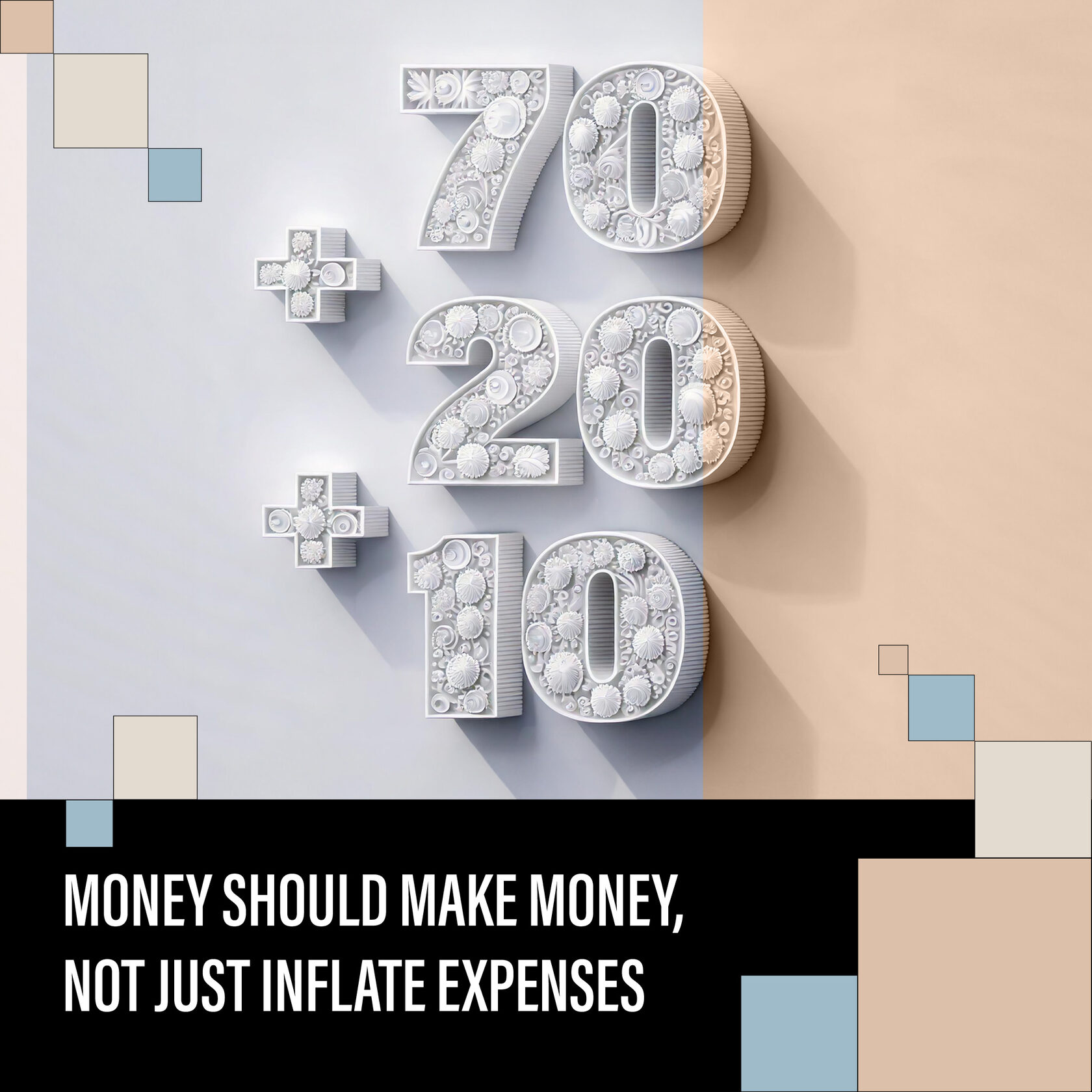
Money Should Work: The 70/20/10 Rule
When you earn money, it’s essential to remember that it should generate income for you rather than become an excuse to inflate expenses. My guiding rule is as follows: I reinvest 70% of what I earn, set aside 20% for my own retirement fund (invested more conservatively), and only use 10% to increase my expenses.
Why 70%? When money works, it creates more money. This is the core principle of capitalism and should be utilized wisely. It’s not about risking everything earned but about rationally distributing assets across various investment tools. The more you invest, the faster your capital grows.
20% goes to a retirement fund. Retirement savings are not just a cushion for old age but also another way to earn. By investing these funds in more conservative tools like bonds or index funds, you ensure stable income and capital preservation.
10% on personal expenses. It’s important not to overestimate your means. Allow yourself some luxury but avoid turning money into a source of temporary pleasures. The main idea is that your bank account should be close to zero—all money should be working. For daily expenses, it’s better to use credit cards, i.e., spending other people's money and then returning it to the bank.
The Illusion of Bank Deposits: How Inflation Eats Up Your Money
Many people still believe that money in a bank deposit is a safe way to preserve capital. But that’s an illusion. Let’s look at why using numbers: average global inflation is around 3% per year, while the average deposit rate in developed countries is about 1.5%. This means your money is losing purchasing power. Even if the deposit rate exceeds inflation, it barely covers income taxes and potential fees.
For example, in the U.S. in 2023, the average deposit rate was 0.5%, while inflation was 2.6%, meaning real returns from deposits were negative. In Europe, the situation is similar: in Germany, for instance, the average deposit rate is around 0.2%, and inflation is 2%.
Financial Literacy: Don’t Make Excuses, Take Action
I often hear from friends and acquaintances that finance is complicated and should have been studied in college. But that’s just an excuse. According to the Standard & Poor's Global FinLit Survey, only 33% of the world’s adult population has basic financial literacy knowledge. In countries with high education levels, like the U.S. and Germany, this figure is higher—around 50%—but still relatively low.
In terms of the gender gap, men are more likely to consider themselves financially literate than women: 35% versus 30% globally. Age also plays a role: young people under 30 and those over 60 have the lowest levels of financial literacy.
But no matter your age or gender—you can always start learning. Your brain is your most valuable asset, and it needs to be put to work. Learn to manage money because, without it, you won’t achieve financial independence.
Personal Experience: A Lawyer Turned Investor
By education, I’m a lawyer, but I quickly realized that without money, you’re not a lawyer, just a legal assistant. I understood that you need to earn money continuously, even if you work for someone else. Always seek opportunities, learn, and move forward.
My investment journey began with simple Forex trading. I invested in various currencies and earned from exchange rate differences. Then I transferred this experience to the bond market and later started engaging with riskier tools—stocks. I also became interested in venture investments, real estate investments, working with investment loans, and even investing in cryptocurrency.
Although I’m not a professional market participant, finance has become part of my life. Skillfully managing money allows you to significantly increase your wealth. Using financial markets provides me with additional returns of around 25% per year, thereby significantly enhancing my financial well-being.
My Financial Principles
Here are some principles I follow:
- Money must work. Never keep money idle in an account; invest it in assets.
- Risk and return. The higher the return, the higher the risk, but there is always a way to find balance.
- Learn and act. Financial literacy is not innate; it’s a skill that can and should be developed.
- Invest in yourself. Never regret spending money on education and self-development—this is the best investment.
- Diversification. Never put all your money into one asset or tool; distribute risks.
Recommended Books
If you’re new to finance and want to deepen your knowledge, I recommend starting with these books:
- Rich Dad Poor Dad by Robert Kiyosaki—a book that explains the importance of investing and how to achieve financial independence.
- The Intelligent Investor by Benjamin Graham—a classic book on long-term investing and principles for selecting stocks.
- Think and Grow Rich by Napoleon Hill—a book on mindset principles that help achieve financial success.
- Principles by Ray Dalio—a book by the founder of one of the largest hedge funds, sharing his approaches to finance and life management.
- Come into My Trading Room by Alexander Elder—a practical guide to trading in financial markets.