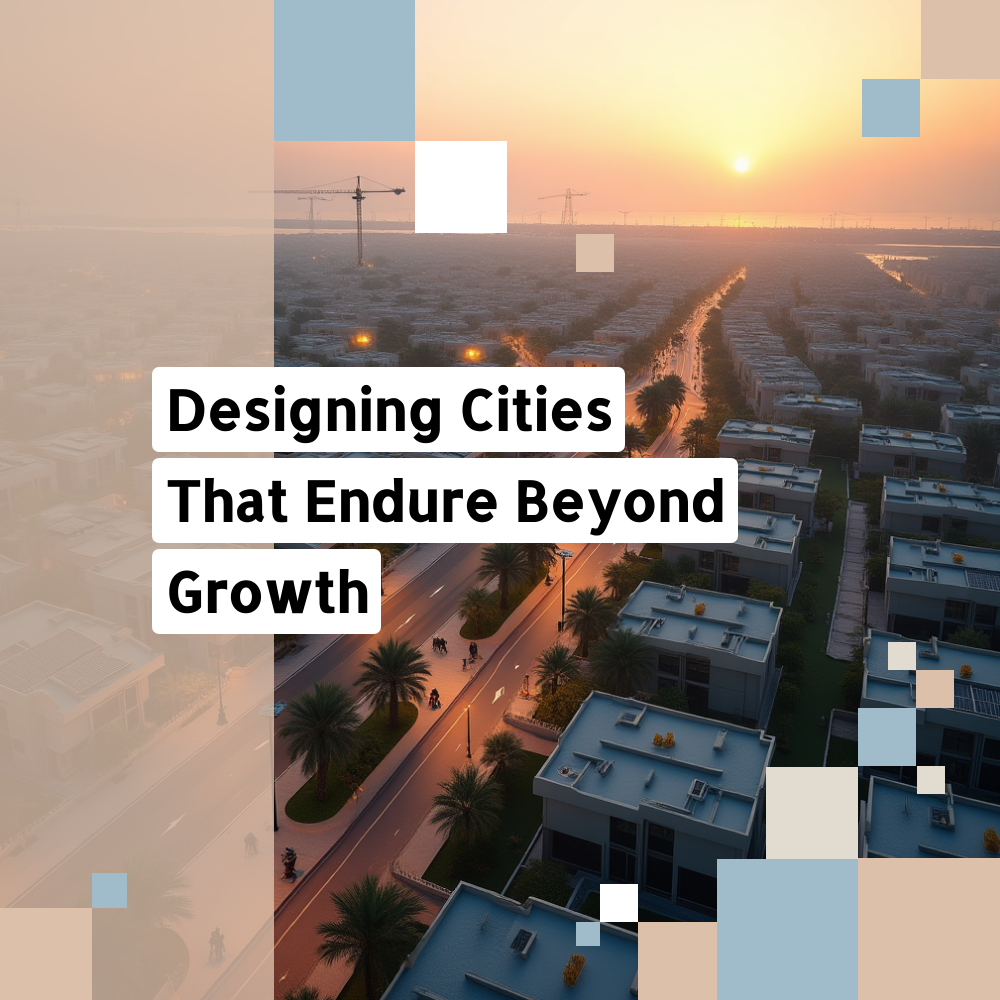
What we’re witnessing in the UAE’s property landscape—particularly the surge in villa prices across emerging and mid-tier neighborhoods like Dubai South and Arabian Ranches 3—is not just a market reaction. It’s a signal. A signal that the fabric of urban living is shifting.
As someone who has spent the better part of a decade immersed in land strategy and urban dynamics, I view this trend not just through the lens of supply-demand mechanics, but through the deeper undercurrents influencing development patterns: the decentralization of city cores, the revaluation of domestic space, and a rising expectation for lifestyle-oriented environments beyond traditional prime zones.
Affordable villa segments posting 20–24% growth, especially in areas with recent handovers, suggests more than transient investor interest. It reflects demand for livability—people choosing space, functionality, and community over proximity to high-status ZIP codes. This reminds me of how cities like Melbourne or Vancouver have long balanced density with dignity by incentivizing high-quality suburban developments connected by robust transit. Are we finally seeing a Gulf-region iteration of this philosophy?
However, growth for growth’s sake can be dangerously attractive. If villa expansions in areas like Dubailand are not accompanied by meaningful investment in mobility infrastructure, social services, and resilient landscaping, we risk repeating past cycles where real estate outpaces the city’s ability to serve its residents. A 24% increase in price must not be mistaken for a 24% increase in quality—or sustainability.
This is where the next leap must happen, and quickly. Technology—particularly spatial data analytics, AI-driven planning tools, and climate modeling—should be leveraged not just to price and market homes, but to preemptively understand how these communities will evolve: traffic flows, heat island risks, energy efficiency, and cultural cohesion. We must let the data teach us not just where people want to live, but how we might help them thrive once they arrive.
And as land becomes more scarce—or more contested—we’ll need to think not just about development, but about stewardship. Integrated ecosystems, mixed-income housing, circular construction methods: these are no longer fringe terms. They are prerequisites if this momentum into 2025 is to have any long-term meaning.
Perhaps the real marker of a “strong” market is not how quickly prices rise—but how wisely we respond when they do.
What happens when affordability meets aspiration—but infrastructure and policy lag behind?
As someone who has spent the better part of a decade immersed in land strategy and urban dynamics, I view this trend not just through the lens of supply-demand mechanics, but through the deeper undercurrents influencing development patterns: the decentralization of city cores, the revaluation of domestic space, and a rising expectation for lifestyle-oriented environments beyond traditional prime zones.
Affordable villa segments posting 20–24% growth, especially in areas with recent handovers, suggests more than transient investor interest. It reflects demand for livability—people choosing space, functionality, and community over proximity to high-status ZIP codes. This reminds me of how cities like Melbourne or Vancouver have long balanced density with dignity by incentivizing high-quality suburban developments connected by robust transit. Are we finally seeing a Gulf-region iteration of this philosophy?
However, growth for growth’s sake can be dangerously attractive. If villa expansions in areas like Dubailand are not accompanied by meaningful investment in mobility infrastructure, social services, and resilient landscaping, we risk repeating past cycles where real estate outpaces the city’s ability to serve its residents. A 24% increase in price must not be mistaken for a 24% increase in quality—or sustainability.
This is where the next leap must happen, and quickly. Technology—particularly spatial data analytics, AI-driven planning tools, and climate modeling—should be leveraged not just to price and market homes, but to preemptively understand how these communities will evolve: traffic flows, heat island risks, energy efficiency, and cultural cohesion. We must let the data teach us not just where people want to live, but how we might help them thrive once they arrive.
And as land becomes more scarce—or more contested—we’ll need to think not just about development, but about stewardship. Integrated ecosystems, mixed-income housing, circular construction methods: these are no longer fringe terms. They are prerequisites if this momentum into 2025 is to have any long-term meaning.
Perhaps the real marker of a “strong” market is not how quickly prices rise—but how wisely we respond when they do.
What happens when affordability meets aspiration—but infrastructure and policy lag behind?