Mother’s Day plans often sound simple on the surface: flowers, dinner, a favorite meal, a quiet afternoon, a small surprise. But if we look more carefully, these gestures reveal something larger about how people want to live — and, importantly, what our homes, neighborhoods, and cities should make possible.
In real estate, we tend to speak in the language of assets, density, transport links, yield, infrastructure. All of that matters. But the true test of a built environment is more intimate: does it support care? Does it make it easier for people to be present for one another?
When someone plans to cook for their mother, organize a self-care day, or rely on a sister in another country to help deliver a gift, we are seeing the modern family operating across multiple layers of space — domestic, urban, and global. This is no longer a marginal condition; it is the norm. Families are distributed. Time is compressed. Emotional life depends increasingly on the quality of systems around us: housing layouts, neighborhood retail, logistics networks, accessible public space, and the digital tools that stitch distance together.
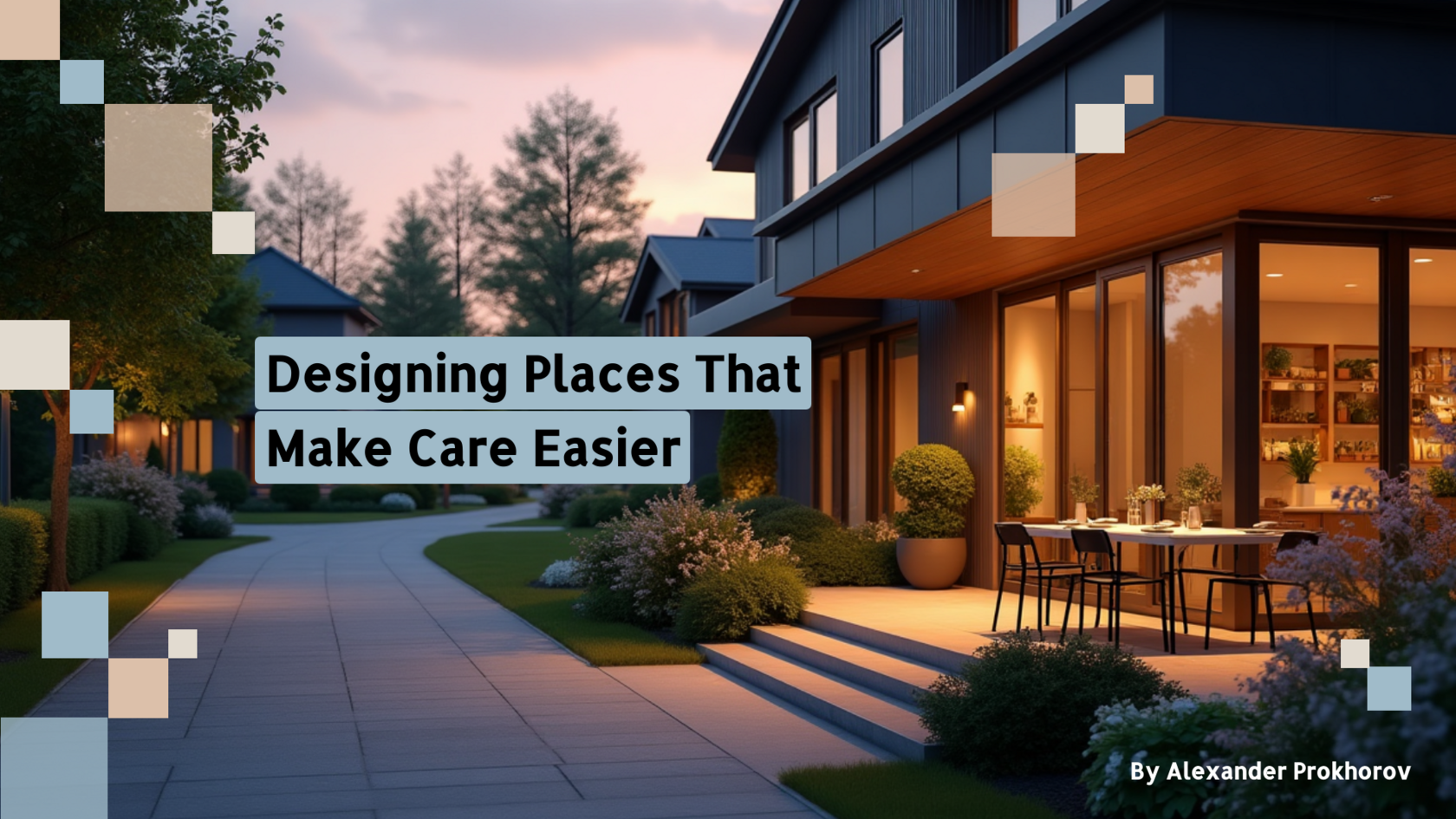
This is where I believe the future of development must become more human-centric. A well-designed apartment is not just efficient in square meters; it can support multigenerational rituals. A good neighborhood is not simply “walkable” in the abstract; it allows an older parent to reach a café, a park, a clinic, or a florist with ease. A great city does not only attract investment; it reduces friction in everyday acts of love.
The market has spent years optimizing for speed and convenience, and that has value. But convenience without meaning becomes sterile. The next chapter of real estate innovation should focus on emotional infrastructure — places and services that support connection, recovery, and dignity. We should be designing for the dinner table as seriously as we design for the parking ratio.
Even technology, often framed as distancing us from one another, can play a more thoughtful role. If a mother lives abroad and a sibling coordinates a gift locally, that is not just e-commerce. It is a cross-border care network enabled by digital trust. The question is whether our physical environments keep pace with these new social realities.
Sustainable urban development, in my view, is not only about carbon, energy, and mobility — though those are essential. It is also about creating places where care is not an afterthought. Where rest is possible. Where family presence is easier to arrange, not harder. Where celebration does not require excessive effort because the city itself is quietly supportive.
Perhaps the most important cities of the future will not be the ones that merely function well, but the ones that understand why people bring flowers home in the first place.
In real estate, we tend to speak in the language of assets, density, transport links, yield, infrastructure. All of that matters. But the true test of a built environment is more intimate: does it support care? Does it make it easier for people to be present for one another?
When someone plans to cook for their mother, organize a self-care day, or rely on a sister in another country to help deliver a gift, we are seeing the modern family operating across multiple layers of space — domestic, urban, and global. This is no longer a marginal condition; it is the norm. Families are distributed. Time is compressed. Emotional life depends increasingly on the quality of systems around us: housing layouts, neighborhood retail, logistics networks, accessible public space, and the digital tools that stitch distance together.
This is where I believe the future of development must become more human-centric. A well-designed apartment is not just efficient in square meters; it can support multigenerational rituals. A good neighborhood is not simply “walkable” in the abstract; it allows an older parent to reach a café, a park, a clinic, or a florist with ease. A great city does not only attract investment; it reduces friction in everyday acts of love.
The market has spent years optimizing for speed and convenience, and that has value. But convenience without meaning becomes sterile. The next chapter of real estate innovation should focus on emotional infrastructure — places and services that support connection, recovery, and dignity. We should be designing for the dinner table as seriously as we design for the parking ratio.
Even technology, often framed as distancing us from one another, can play a more thoughtful role. If a mother lives abroad and a sibling coordinates a gift locally, that is not just e-commerce. It is a cross-border care network enabled by digital trust. The question is whether our physical environments keep pace with these new social realities.
Sustainable urban development, in my view, is not only about carbon, energy, and mobility — though those are essential. It is also about creating places where care is not an afterthought. Where rest is possible. Where family presence is easier to arrange, not harder. Where celebration does not require excessive effort because the city itself is quietly supportive.
Perhaps the most important cities of the future will not be the ones that merely function well, but the ones that understand why people bring flowers home in the first place.