Luxury real estate is often presented as a finished product: marble, views, square footage, price. But the most interesting question is not what a residence contains today — it is what that residence says about how cities are evolving.
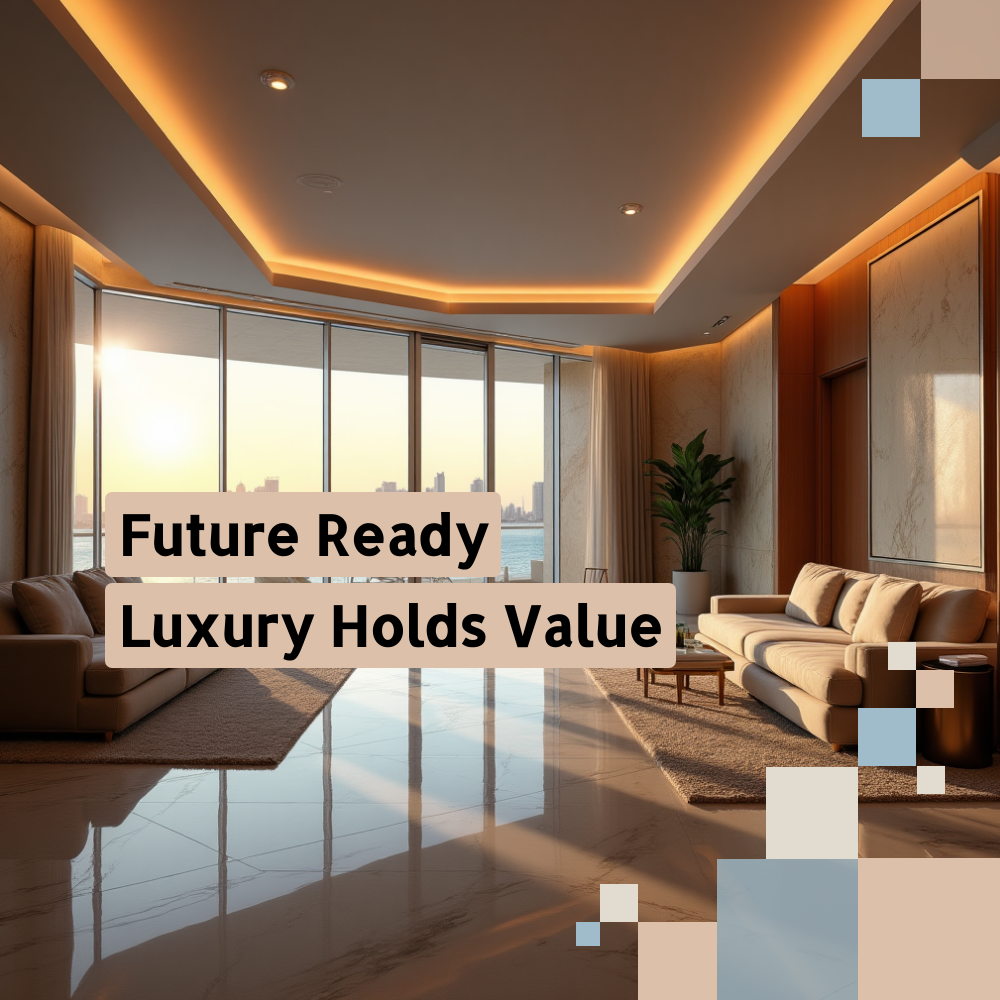
A fully upgraded four-bedroom home in Atlantis The Royal, with 4,000 square feet, Italian marble, and custom furniture, clearly sits at the highest end of the market. At 85 million, it is not simply an apartment; it is a statement about aspiration, identity, and the role of branded, experience-driven living in global cities such as Dubai.
What catches my attention, however, is not the finish palette. It is the deeper shift underneath. Properties like this reflect how premium real estate is moving beyond location alone and into curation. Buyers are no longer just purchasing land value or a skyline view. They are buying a complete environment — hospitality, privacy, design coherence, and increasingly, access to a lifestyle ecosystem. In many ways, the home is becoming a platform.
This matters for the industry because it challenges developers and planners to think more carefully about what “value” really means. For years, the market rewarded spectacle. Today, the more durable premium may come from something quieter: adaptability, operational intelligence, wellness, and long-term relevance. A residence can be exquisitely finished, but if it is not aligned with how people will live ten years from now, it risks becoming a beautiful artifact rather than a resilient asset.
That is where I believe innovation must enter the conversation. The future of high-end residential should not stop at imported materials and bespoke interiors. It should include smarter environmental performance, better integration with district mobility, healthier indoor systems, and digital layers that make homes more intuitive and efficient. True luxury in the next cycle will likely be defined less by visible excess and more by invisible excellence.
Dubai has a unique opportunity here. It is one of the few markets willing to move quickly, experiment boldly, and set new benchmarks. But boldness is most powerful when paired with long-term urban intelligence. Iconic residences should not exist as isolated trophies; they should contribute to a broader story about how density, design, infrastructure, and human experience can work together.
The real estate sector has always been good at selling prestige. The next frontier is building meaning — creating places that remain desirable not only because they are rare, but because they are thoughtful.
And perhaps that is the more important measure of a landmark home: not how loudly it announces wealth, but how clearly it anticipates the future.
A fully upgraded four-bedroom home in Atlantis The Royal, with 4,000 square feet, Italian marble, and custom furniture, clearly sits at the highest end of the market. At 85 million, it is not simply an apartment; it is a statement about aspiration, identity, and the role of branded, experience-driven living in global cities such as Dubai.
What catches my attention, however, is not the finish palette. It is the deeper shift underneath. Properties like this reflect how premium real estate is moving beyond location alone and into curation. Buyers are no longer just purchasing land value or a skyline view. They are buying a complete environment — hospitality, privacy, design coherence, and increasingly, access to a lifestyle ecosystem. In many ways, the home is becoming a platform.
This matters for the industry because it challenges developers and planners to think more carefully about what “value” really means. For years, the market rewarded spectacle. Today, the more durable premium may come from something quieter: adaptability, operational intelligence, wellness, and long-term relevance. A residence can be exquisitely finished, but if it is not aligned with how people will live ten years from now, it risks becoming a beautiful artifact rather than a resilient asset.
That is where I believe innovation must enter the conversation. The future of high-end residential should not stop at imported materials and bespoke interiors. It should include smarter environmental performance, better integration with district mobility, healthier indoor systems, and digital layers that make homes more intuitive and efficient. True luxury in the next cycle will likely be defined less by visible excess and more by invisible excellence.
Dubai has a unique opportunity here. It is one of the few markets willing to move quickly, experiment boldly, and set new benchmarks. But boldness is most powerful when paired with long-term urban intelligence. Iconic residences should not exist as isolated trophies; they should contribute to a broader story about how density, design, infrastructure, and human experience can work together.
The real estate sector has always been good at selling prestige. The next frontier is building meaning — creating places that remain desirable not only because they are rare, but because they are thoughtful.
And perhaps that is the more important measure of a landmark home: not how loudly it announces wealth, but how clearly it anticipates the future.