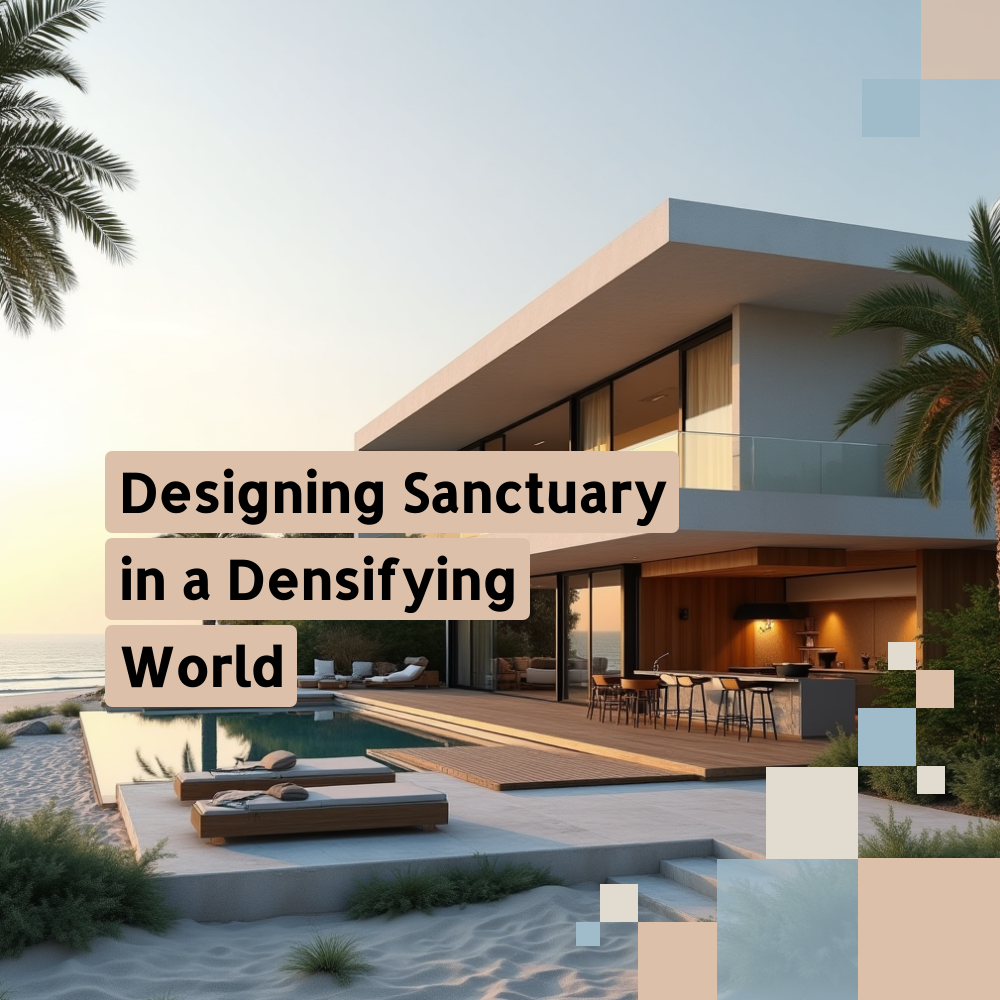
When I see a home like the custom-built villa in Palm Jumeirah—spanning over 7,400 square feet, seamlessly marrying indoor opulence with outdoor leisure—I don’t simply see a luxury listing. I see a symbol of something deeper: a reflection of how our relationship with space, comfort, and even prestige is evolving.
Set against the backdrop of one of the world’s most ambitious man-made archipelagos, this property carries a certain theatricality. Infinity pools blend into the horizon. Pizza ovens sit alongside jacuzzis. Every element is engineered to indulge and impress. And yet, beyond its glittering surfaces, I'm reminded of a more urgent dialogue taking place in the world of urban planning and real estate development: What does it mean to live well, truly well, in a rapidly urbanizing and warming world?
Luxury is no longer just about material abundance; increasingly, it's about thoughtful design, environmental integration, and quality of experience. A home should not merely occupy land—it should harmonize with it, adapt to changing lifestyles, and ideally return more to the environment than it takes. Functional architecture that innovates toward sustainability rather than resisting its demands is becoming the new benchmark for excellence.
Palm Jumeirah, as a whole, represents a triumph of vision—it transformed sea into city. But the next evolution of places like it must lean into regenerative principles. Can artificial islands be designed to clean ocean water or restore marine ecosystems? Can large homes be net-zero in their energy use, while offering resilient comfort even in rising temperatures? These aren’t lofty ideals; they are necessary recalibrations for a century where climate and culture must coexist more sensitively.
Technology has extraordinary potential here. Smart home systems are merely the beginning. Emerging materials, decentralized energy grids, adaptive shading systems—these can all, over time, be incorporated not just as afterthoughts or luxury perks, but as defaults.
I often find that when a property like this one is unveiled, media attention gravitates toward its price tag—75 million dirhams. But I'd argue its real value lies in what it could represent. If homes of this caliber can become blueprints for smarter, gentler, and more forward-thinking design, they could uplift not only lifestyles, but futures.
And so I wonder: when we place a villa by the sea, what legacy are we really anchoring to the shore? 🌊
Set against the backdrop of one of the world’s most ambitious man-made archipelagos, this property carries a certain theatricality. Infinity pools blend into the horizon. Pizza ovens sit alongside jacuzzis. Every element is engineered to indulge and impress. And yet, beyond its glittering surfaces, I'm reminded of a more urgent dialogue taking place in the world of urban planning and real estate development: What does it mean to live well, truly well, in a rapidly urbanizing and warming world?
Luxury is no longer just about material abundance; increasingly, it's about thoughtful design, environmental integration, and quality of experience. A home should not merely occupy land—it should harmonize with it, adapt to changing lifestyles, and ideally return more to the environment than it takes. Functional architecture that innovates toward sustainability rather than resisting its demands is becoming the new benchmark for excellence.
Palm Jumeirah, as a whole, represents a triumph of vision—it transformed sea into city. But the next evolution of places like it must lean into regenerative principles. Can artificial islands be designed to clean ocean water or restore marine ecosystems? Can large homes be net-zero in their energy use, while offering resilient comfort even in rising temperatures? These aren’t lofty ideals; they are necessary recalibrations for a century where climate and culture must coexist more sensitively.
Technology has extraordinary potential here. Smart home systems are merely the beginning. Emerging materials, decentralized energy grids, adaptive shading systems—these can all, over time, be incorporated not just as afterthoughts or luxury perks, but as defaults.
I often find that when a property like this one is unveiled, media attention gravitates toward its price tag—75 million dirhams. But I'd argue its real value lies in what it could represent. If homes of this caliber can become blueprints for smarter, gentler, and more forward-thinking design, they could uplift not only lifestyles, but futures.
And so I wonder: when we place a villa by the sea, what legacy are we really anchoring to the shore? 🌊