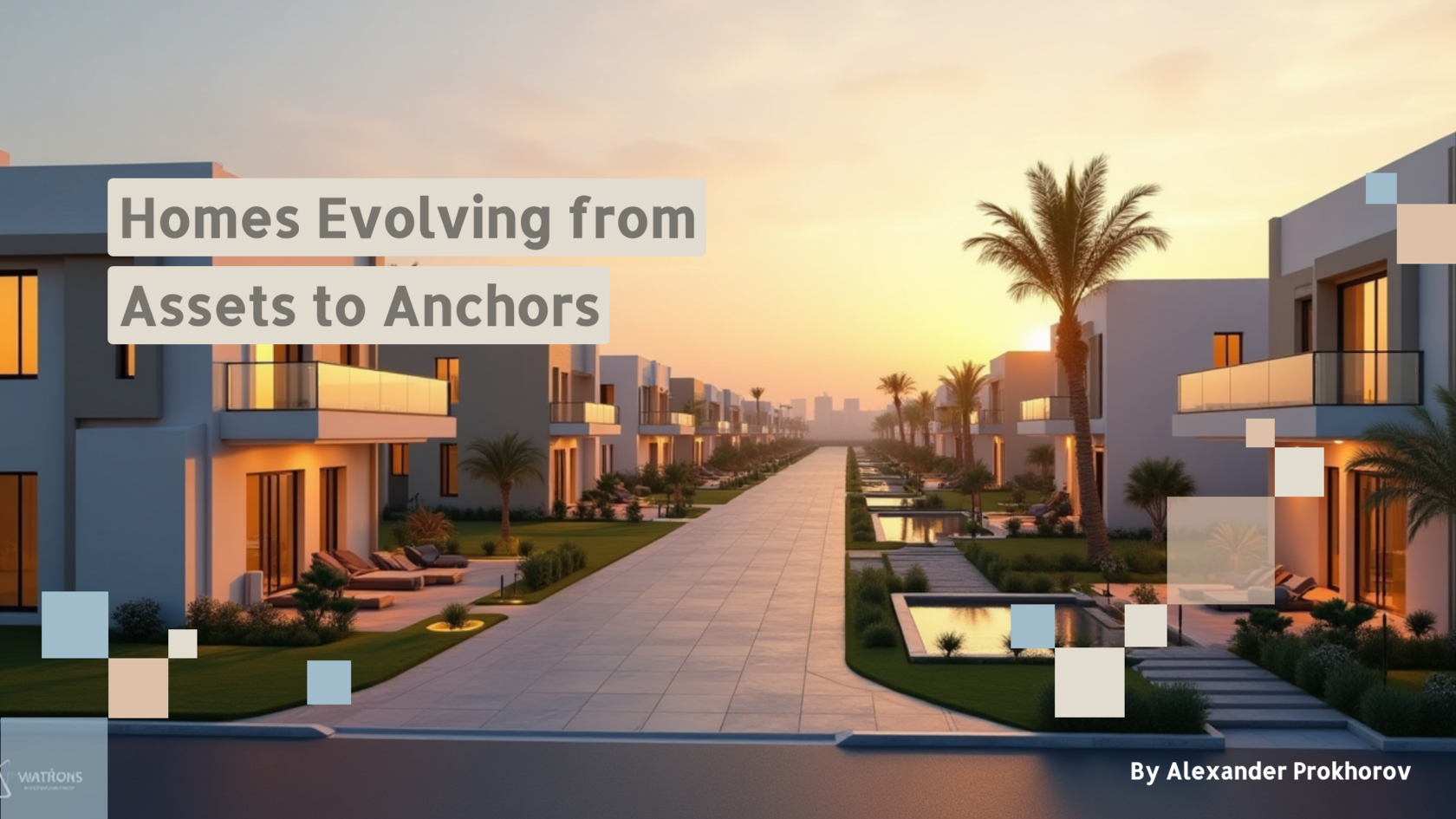
In following the current momentum of Dubai’s villa market, as illuminated by Mark Richards, I am struck not only by the trajectory of increasing prices and high demand, but more so by what lies underneath: a profound psychological and cultural shift in how people view space, time, and belonging in an urban landscape.
Dubai has historically been a transient city—fast-moving, investor-driven, and architecturally performative. But what we are witnessing now is subtle yet significant: a transition from a city of possibilities to a city of commitments. When families talk about "forever homes" in Dubai, they are participating in the kind of rootedness that urban theorists and planners have long associated with mature cities. The question is whether the built environment is keeping pace with this deeper social evolution.
The villa, once a symbol of affluence or short-term luxury, is becoming a nucleus of permanence. This means it must evolve from being merely a status symbol to becoming a vessel of emotional durability, environmental resilience, and technological relevance.
Mark rightly notes the drive toward renovating legacy villas. But renovations often focus on finishes and aesthetics. The deeper opportunity, I believe, lies in re-imagining these homes as nodes within a networked, climate-conscious urban ecosystem. Smart home technology—once considered a luxury—is rapidly becoming baseline. A villa without intelligent energy systems or integrated air-quality monitoring may soon stand out not for its charm, but for its obsolescence.
Furthermore, the rise in demand in once-overlooked communities like Al Furjan points to another trend: the decentralization of desirability. Capital growth is no longer confined to traditional prestige zones. This suggests a moment ripe for thoughtful place-making—where developers, planners, and policy-makers collaborate to imbue ‘emerging’ neighborhoods with not just infrastructure, but identity.
Yet alongside this push forward must come a reflective pause. Are we simply layering new ideas atop old bones? Or are we designing for the next two generations of dwellers—those who will live not at the edges of luxury, but at the junction of sustainability, culture, and continuity?
To me, the Dubai villa of the future is not just bigger or smarter. It is wiser. It learns from global best practices in energy efficiency, spatial flexibility, and wellness design. It responds to climate, yes—but also to community.
Is it possible that in renovating and adapting these homes, what residents are truly renovating is their relationship with the city itself? 🏡
Dubai has historically been a transient city—fast-moving, investor-driven, and architecturally performative. But what we are witnessing now is subtle yet significant: a transition from a city of possibilities to a city of commitments. When families talk about "forever homes" in Dubai, they are participating in the kind of rootedness that urban theorists and planners have long associated with mature cities. The question is whether the built environment is keeping pace with this deeper social evolution.
The villa, once a symbol of affluence or short-term luxury, is becoming a nucleus of permanence. This means it must evolve from being merely a status symbol to becoming a vessel of emotional durability, environmental resilience, and technological relevance.
Mark rightly notes the drive toward renovating legacy villas. But renovations often focus on finishes and aesthetics. The deeper opportunity, I believe, lies in re-imagining these homes as nodes within a networked, climate-conscious urban ecosystem. Smart home technology—once considered a luxury—is rapidly becoming baseline. A villa without intelligent energy systems or integrated air-quality monitoring may soon stand out not for its charm, but for its obsolescence.
Furthermore, the rise in demand in once-overlooked communities like Al Furjan points to another trend: the decentralization of desirability. Capital growth is no longer confined to traditional prestige zones. This suggests a moment ripe for thoughtful place-making—where developers, planners, and policy-makers collaborate to imbue ‘emerging’ neighborhoods with not just infrastructure, but identity.
Yet alongside this push forward must come a reflective pause. Are we simply layering new ideas atop old bones? Or are we designing for the next two generations of dwellers—those who will live not at the edges of luxury, but at the junction of sustainability, culture, and continuity?
To me, the Dubai villa of the future is not just bigger or smarter. It is wiser. It learns from global best practices in energy efficiency, spatial flexibility, and wellness design. It responds to climate, yes—but also to community.
Is it possible that in renovating and adapting these homes, what residents are truly renovating is their relationship with the city itself? 🏡