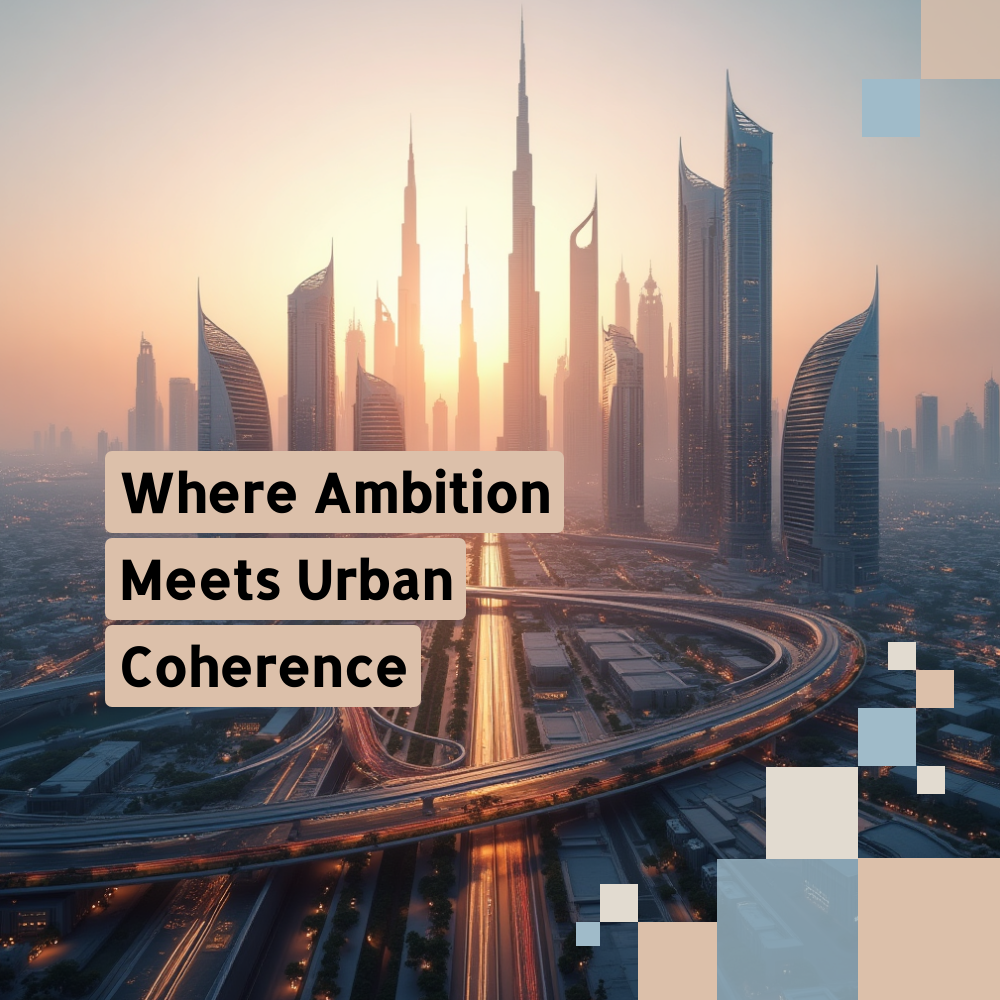
What I find most compelling about Dubai is not simply its speed, but its willingness to treat ambition as infrastructure.
In real estate, we often speak about supply, absorption, zoning, affordability, and returns—as we should. But cities are not shaped by spreadsheets alone. They are shaped by collective belief: a shared confidence that the future can be designed, not merely inherited. Dubai has institutionalized that belief. It has made boldness operational.
The story of Bayut and Dubizzle resonates because it sits at the intersection of two forces that will define the next generation of cities: digital trust and urban adaptability. A property platform is no longer just a marketplace. At its best, it becomes a layer of urban intelligence—revealing how people search, compare, relocate, invest, and imagine their place in the city. That data, if used thoughtfully, can influence much more than transactions. It can help us understand where infrastructure is lagging behind demand, where communities are emerging, and where planning needs to become more human-centric.
This is where I think the deeper lesson lies.
Dubai’s success should not be interpreted only as a triumph of scale or branding. Its more important achievement is that it has created an environment where experimentation is not treated as a threat to order, but as a pathway to progress. That matters enormously for developers, planners, and policymakers. In many cities, regulation reacts to change. In more future-ready cities, regulation evolves with it.
Of course, speed has its own risks. A city can become so focused on momentum that it forgets memory, identity, or social balance. The real challenge for high-growth urban environments is not whether they can build fast—it is whether they can build wisely. Can they create districts that are not only investable, but livable? Can technology improve transparency without reducing housing to pure abstraction? Can “smart” systems remain rooted in the daily experience of actual residents?
These are not philosophical side notes. They are now central to asset resilience.
As someone who has spent years thinking about land strategy and development, I increasingly believe the most successful real estate ecosystems will be those that combine three qualities: regulatory clarity, digital maturity, and emotional intelligence. Dubai has made impressive progress on the first two. The next frontier—perhaps the most important one—is ensuring that urban ambition matures into urban belonging.
That, to me, is the true evolution of the “Dubai-it” mindset: not just making the impossible possible, but making the extraordinary feel sustainable, inclusive, and deeply human.
Because in the end, the most advanced city is not the one that rises fastest—but the one that understands what, and who, it is really rising for.
In real estate, we often speak about supply, absorption, zoning, affordability, and returns—as we should. But cities are not shaped by spreadsheets alone. They are shaped by collective belief: a shared confidence that the future can be designed, not merely inherited. Dubai has institutionalized that belief. It has made boldness operational.
The story of Bayut and Dubizzle resonates because it sits at the intersection of two forces that will define the next generation of cities: digital trust and urban adaptability. A property platform is no longer just a marketplace. At its best, it becomes a layer of urban intelligence—revealing how people search, compare, relocate, invest, and imagine their place in the city. That data, if used thoughtfully, can influence much more than transactions. It can help us understand where infrastructure is lagging behind demand, where communities are emerging, and where planning needs to become more human-centric.
This is where I think the deeper lesson lies.
Dubai’s success should not be interpreted only as a triumph of scale or branding. Its more important achievement is that it has created an environment where experimentation is not treated as a threat to order, but as a pathway to progress. That matters enormously for developers, planners, and policymakers. In many cities, regulation reacts to change. In more future-ready cities, regulation evolves with it.
Of course, speed has its own risks. A city can become so focused on momentum that it forgets memory, identity, or social balance. The real challenge for high-growth urban environments is not whether they can build fast—it is whether they can build wisely. Can they create districts that are not only investable, but livable? Can technology improve transparency without reducing housing to pure abstraction? Can “smart” systems remain rooted in the daily experience of actual residents?
These are not philosophical side notes. They are now central to asset resilience.
As someone who has spent years thinking about land strategy and development, I increasingly believe the most successful real estate ecosystems will be those that combine three qualities: regulatory clarity, digital maturity, and emotional intelligence. Dubai has made impressive progress on the first two. The next frontier—perhaps the most important one—is ensuring that urban ambition matures into urban belonging.
That, to me, is the true evolution of the “Dubai-it” mindset: not just making the impossible possible, but making the extraordinary feel sustainable, inclusive, and deeply human.
Because in the end, the most advanced city is not the one that rises fastest—but the one that understands what, and who, it is really rising for.