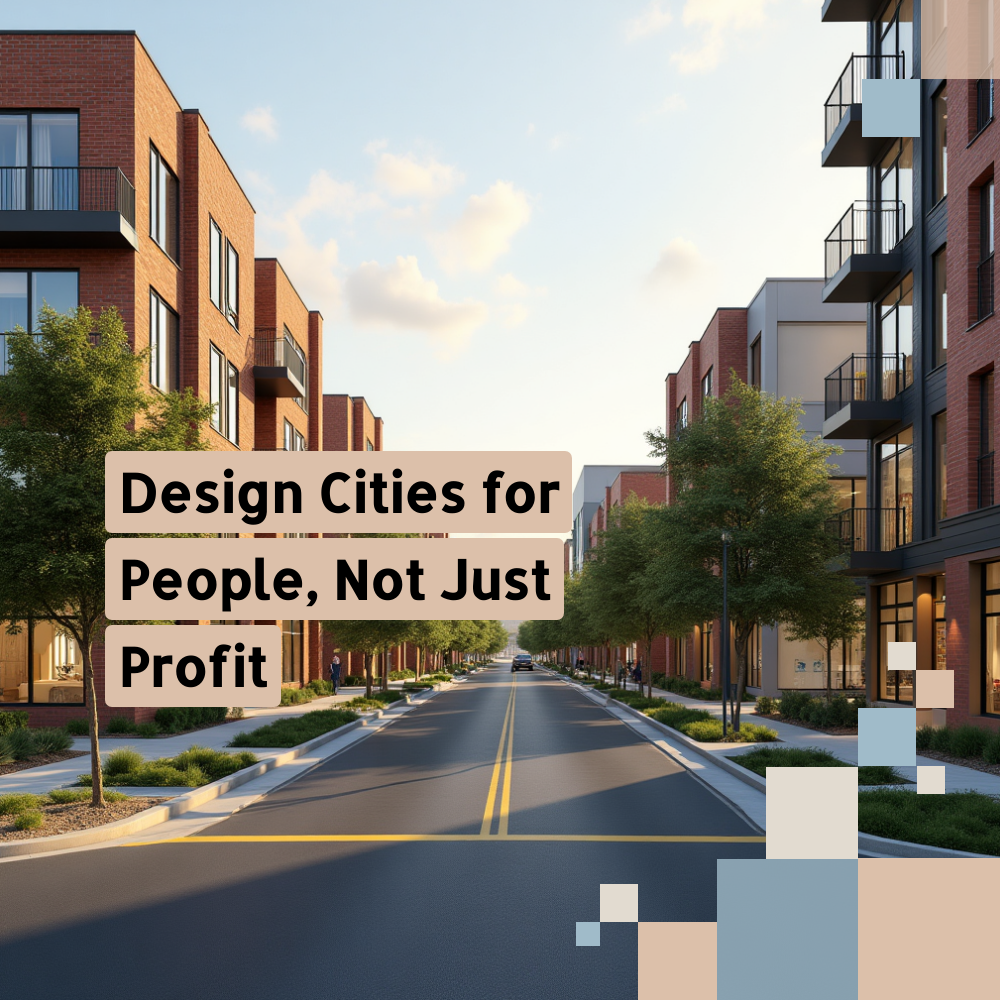
In many ways, the built environment is our most enduring autobiography—etched not in ink, but in concrete, zoning codes, and transit systems. When I reflect on today’s real estate discourse—particularly around land development and the use of underutilized spaces—I’m struck by how often we default to solving yesterday’s problems, using yesterday’s playbook. But we no longer have that luxury. The future is unfolding at a pace, and with a complexity, that demands a new kind of long-term thinking.
Consider the recurring conversation around converting vacant office buildings into housing—a well-intentioned idea, yes, but symptomatic of a reactive mindset. Why, in 2024, are we still lagging in developing flexible-use frameworks that anticipate the inevitable shifts in urban demand? If remote work and hybrid models are here to stay—a point underscored by declining commercial occupancy rates—then our land strategies must begin to reflect a fundamentally more agile paradigm. Not tomorrow. Today.
What gives me cautious optimism is the growing awareness that real estate must evolve from being a purely transactional industry into one that is strategic, regenerative, and human-centric. The rise of 15-minute cities, zoning reform debates, and pilot programs integrating data-driven planning tools offer glimpses of this future. But transforming ideas into systemic practice remains our biggest hurdle.
In my own work, I’ve seen how cross-sector collaboration—where developers, urban planners, technologists, and community voices align early—can reshape the development process. We talk often of “highest and best use,” but that calculation must now include long-term social and ecological resilience, not just short-term economic yield.
To do this, we need more than new infrastructure—we need frameworks that elevate design ethics, reward adaptive reuse, and prioritize access over aesthetics. Technology is an enabler here, but not the answer in itself. AI can help us model urban heat islands or simulate mobility flow, but it cannot—yet—discern the soul of a neighborhood. That’s still our responsibility.
My hope is that we begin to treat land not as an asset to extract value from, but as a shared canvas for innovation, equity, and continuity. When you look at post-industrial lots or post-COVID vacancies, the easy impulse is to see decay. I see potential—unrealized spatial capital waiting for a more imaginative question.
What if the real opportunity isn’t to simply repurpose space, but to rethink how we define purpose itself? 🌱
Consider the recurring conversation around converting vacant office buildings into housing—a well-intentioned idea, yes, but symptomatic of a reactive mindset. Why, in 2024, are we still lagging in developing flexible-use frameworks that anticipate the inevitable shifts in urban demand? If remote work and hybrid models are here to stay—a point underscored by declining commercial occupancy rates—then our land strategies must begin to reflect a fundamentally more agile paradigm. Not tomorrow. Today.
What gives me cautious optimism is the growing awareness that real estate must evolve from being a purely transactional industry into one that is strategic, regenerative, and human-centric. The rise of 15-minute cities, zoning reform debates, and pilot programs integrating data-driven planning tools offer glimpses of this future. But transforming ideas into systemic practice remains our biggest hurdle.
In my own work, I’ve seen how cross-sector collaboration—where developers, urban planners, technologists, and community voices align early—can reshape the development process. We talk often of “highest and best use,” but that calculation must now include long-term social and ecological resilience, not just short-term economic yield.
To do this, we need more than new infrastructure—we need frameworks that elevate design ethics, reward adaptive reuse, and prioritize access over aesthetics. Technology is an enabler here, but not the answer in itself. AI can help us model urban heat islands or simulate mobility flow, but it cannot—yet—discern the soul of a neighborhood. That’s still our responsibility.
My hope is that we begin to treat land not as an asset to extract value from, but as a shared canvas for innovation, equity, and continuity. When you look at post-industrial lots or post-COVID vacancies, the easy impulse is to see decay. I see potential—unrealized spatial capital waiting for a more imaginative question.
What if the real opportunity isn’t to simply repurpose space, but to rethink how we define purpose itself? 🌱