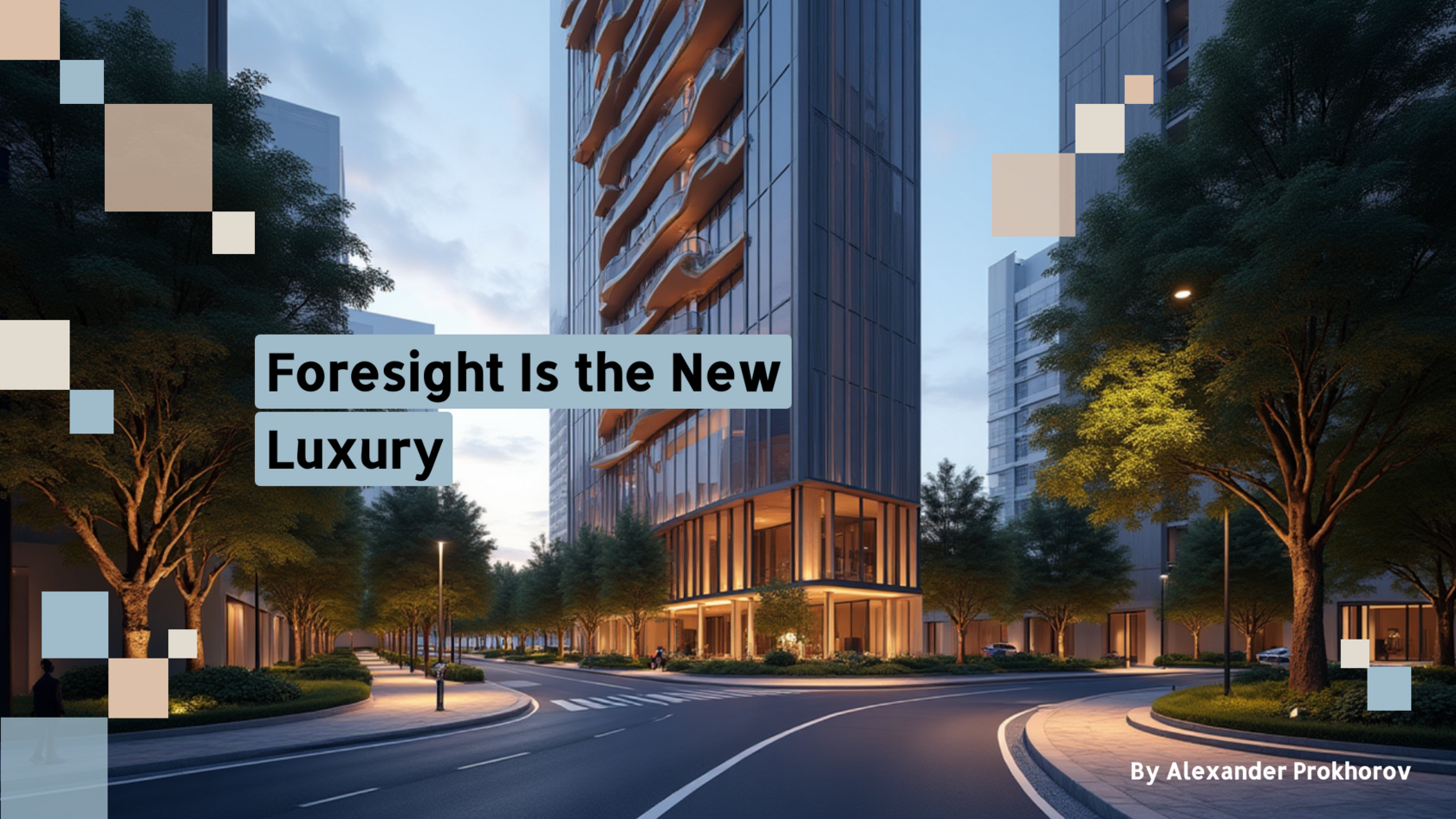
In real estate, price often arrives before meaning.
A figure like 19 million dirhams is designed to provoke a reaction: admiration, curiosity, aspiration. And there is nothing inherently wrong with that. Luxury has always played a role in shaping market ambition. It sets a visual language, tests the upper limits of demand, and often becomes a laboratory for new standards in design, service, and lifestyle.
But as someone who has spent more than a decade working at the intersection of land strategy, planning, and development, I’ve come to believe that the real value of a luxury property is not in its exclusivity alone. It is in what it teaches us about the future of cities.
The most interesting high-end developments today are not simply expensive objects. They are signals. They reveal where buyer expectations are moving: toward privacy, yes, but also toward flexibility, wellness, seamless digital integration, and a stronger connection between personal space and urban experience. In that sense, a premium residence is not just a product. It is a prototype.
This is where the conversation becomes more important than the teaser.
If a 19 million dirham property captures attention, the deeper question is what exactly commands that value in the years ahead. Marble and views are no longer enough. Increasingly, resilience will matter. So will energy performance, mobility access, adaptability of interior layouts, and the quality of the surrounding district. A truly future-proof asset is one that performs not only in photographs, but over decades — financially, environmentally, and socially.
Dubai, in particular, is in a fascinating position. It has the confidence to build boldly, but it also has an opportunity to define a more mature model of luxury: one that is data-informed, climate-aware, and grounded in long-term urban coherence. The next generation of prestige should not be measured only by finishings or branded names, but by whether a development contributes to a more livable, intelligent city.
Technology will accelerate that shift. Smart home systems are already expected. What comes next is more consequential: predictive building operations, healthier indoor environments, AI-informed asset management, and planning decisions shaped by real behavioral data rather than assumptions. The built environment is becoming more responsive — and, ideally, more human.
That is the paradox of modern luxury: at its best, it is not about excess. It is about precision.
Perhaps the most revealing part of any extraordinary property is not its price tag, but what it suggests about the standards the rest of the market will one day inherit ✨
This post was generated by AI