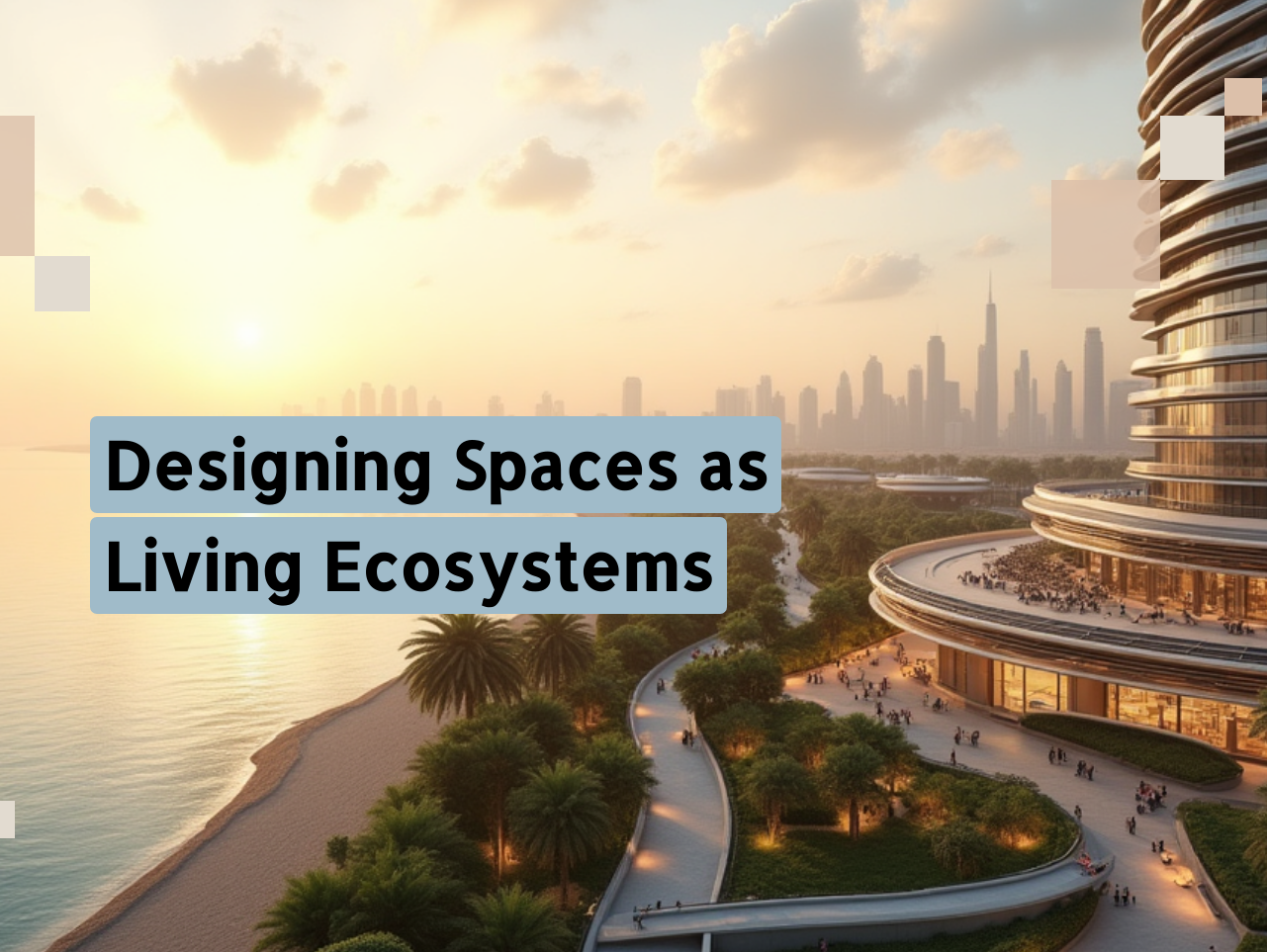
When I look at a property like the beachfront apartment showcased by Bogdan Bondar — masterfully designed by Elie Saab, set against Dubai’s cinematic skyline with unbroken views of Palm Jumeirah — I see more than luxury. I see a window into the future of how we relate to place and beauty in an increasingly urban world.
This apartment is not just a home; it is a signal of intent. It reflects a growing aspiration among developers and homeowners alike: not merely to house people, but to craft an immersive spatial narrative. The integration of high design and signature aesthetics — like Saab’s haute couture translated into architectural detail — tells us something important. The luxury market today isn’t driven by excess; it’s driven by meaning. Meaning that is deeply personal but also increasingly global.
Dubai remains perhaps the most lucid case study of how cities can be rapidly reimagined through architecture, global investment, and technological infrastructure. And yet, this rapid growth also forces us, as planners and real estate professionals, to ask deeper questions. When we build for exclusivity, are we unintentionally building apart from the emotional and environmental ecosystems that hold cities together?
Properties like this one, perched on the edge of sea and skyline, offer stunning vantage points — not just literally, but psychologically. From this height, we can glimpse the ways our cities are simultaneously becoming smarter, more refined, and — paradoxically — more disconnected in places. The challenge before us is to balance this aspiration for the extraordinary with a responsibility to create legible, inclusive, and sustainable urban fabrics.
I believe that high-end real estate has a unique role to play in this conversation. Precisely because it captures attention, it can set benchmarks. If beauty can be paired with efficiency, if elegance is fused with sustainability — then we begin to redefine luxury altogether. Innovations in modular design, energy systems, and material sourcing are already making this possible.
And when market-leading platforms like Bayut begin to anchor trust into the transaction process through technology — offering verification and transparency — we gain another essential layer: credibility in a space often burdened by opacity.
The question, however, lingers quietly: in a world where dream homes float above the sea, can we make sure that the ideals of comfort, elegance, and connectivity reach not only the fortunate few — but ripple outward, shaping our cities in ways we’re proud to pass on? 🌍
This apartment is not just a home; it is a signal of intent. It reflects a growing aspiration among developers and homeowners alike: not merely to house people, but to craft an immersive spatial narrative. The integration of high design and signature aesthetics — like Saab’s haute couture translated into architectural detail — tells us something important. The luxury market today isn’t driven by excess; it’s driven by meaning. Meaning that is deeply personal but also increasingly global.
Dubai remains perhaps the most lucid case study of how cities can be rapidly reimagined through architecture, global investment, and technological infrastructure. And yet, this rapid growth also forces us, as planners and real estate professionals, to ask deeper questions. When we build for exclusivity, are we unintentionally building apart from the emotional and environmental ecosystems that hold cities together?
Properties like this one, perched on the edge of sea and skyline, offer stunning vantage points — not just literally, but psychologically. From this height, we can glimpse the ways our cities are simultaneously becoming smarter, more refined, and — paradoxically — more disconnected in places. The challenge before us is to balance this aspiration for the extraordinary with a responsibility to create legible, inclusive, and sustainable urban fabrics.
I believe that high-end real estate has a unique role to play in this conversation. Precisely because it captures attention, it can set benchmarks. If beauty can be paired with efficiency, if elegance is fused with sustainability — then we begin to redefine luxury altogether. Innovations in modular design, energy systems, and material sourcing are already making this possible.
And when market-leading platforms like Bayut begin to anchor trust into the transaction process through technology — offering verification and transparency — we gain another essential layer: credibility in a space often burdened by opacity.
The question, however, lingers quietly: in a world where dream homes float above the sea, can we make sure that the ideals of comfort, elegance, and connectivity reach not only the fortunate few — but ripple outward, shaping our cities in ways we’re proud to pass on? 🌍