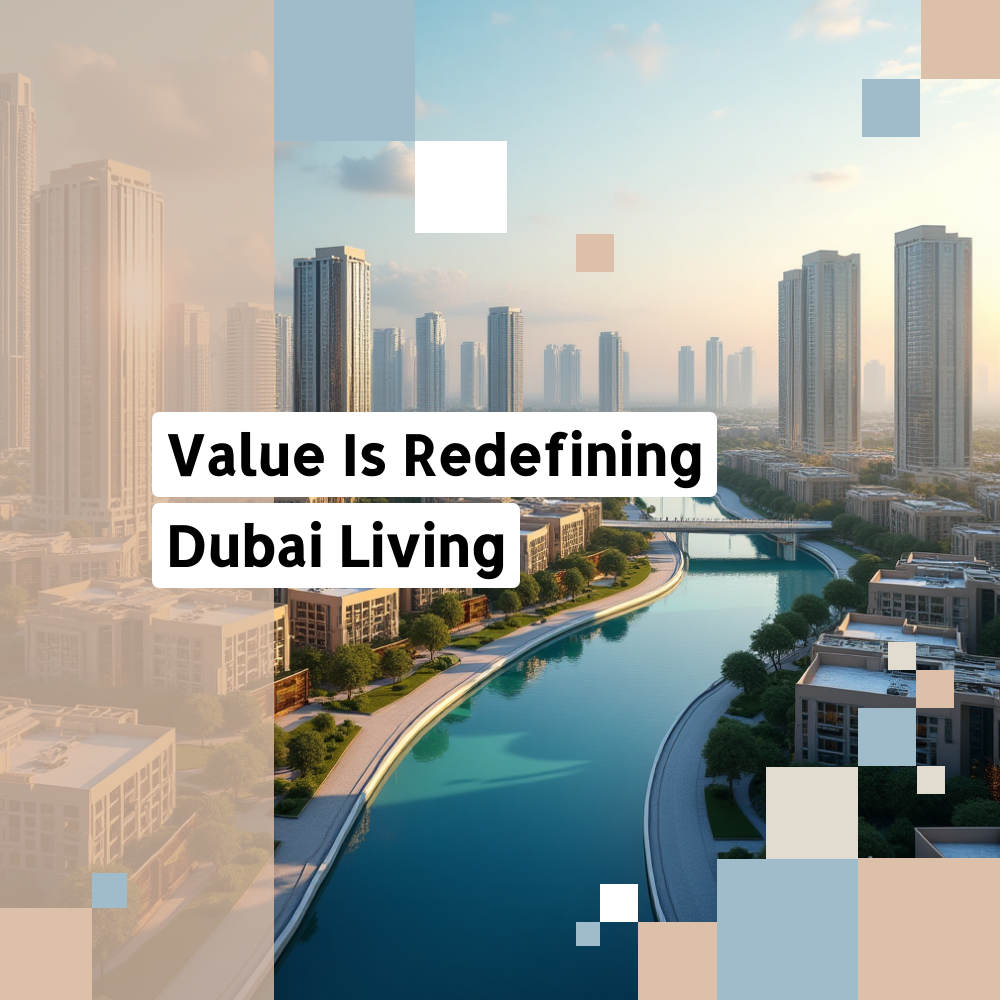
What fascinates me most about Dubai’s residential map is not which district is trending this quarter, but what those preferences reveal about the city’s deeper evolution.
When buyers gravitate toward Jumeirah or Palm Jumeirah for ultra-luxury ownership, while renters favor Bluewaters Island, we are seeing more than a pricing distinction. We are seeing two different relationships with place. Ownership at the top end is increasingly about legacy, identity, and permanence. Renting, even in the super-prime segment, is more about access, flexibility, and experience. That shift matters because it tells us that the future of real estate is not simply defined by product type or square footage, but by mindset.
The same pattern appears further down the market. Dubai Marina continuing to perform for both buying and renting suggests something many developers still underestimate: consistency is a form of luxury. People are drawn to places where mobility, amenities, walkability, and familiarity come together in a coherent urban experience. Meanwhile, JVC’s enduring popularity in the mid-market points to another truth — affordability alone is not enough. People want neighborhoods that feel usable, connected, and socially alive.
This is where I believe the real conversation should begin.
Too often, market commentary treats demand as a scoreboard. But in practice, demand is feedback. If Al Nahda continues to attract budget-conscious renters and Dubai Silicon Oasis appeals to practical buyers, then urban planners and developers should ask why these areas work for certain life stages — and how to design future communities that provide the same resilience with higher quality of life.
The villa market is perhaps even more revealing. Dubai Hills Estate and Palm Jumeirah represent two distinct visions of aspiration: one built around landscape, family life, and structured prestige; the other around iconic form and rare experiential value. Both are successful, but for different reasons. This suggests that premium development can no longer rely on exclusivity alone. It must deliver a clear philosophy of living.
Looking ahead, technology will sharpen these distinctions. Search behavior, mobility data, and tenant movement patterns will increasingly show us not just where people want to live, but how they want to live. The opportunity for real estate leaders is to use that intelligence responsibly — not to chase clicks, but to build places that anticipate human needs over a 10- or 20-year horizon.
Dubai has already proven it can move faster than most global cities. The next challenge is subtler: can it also become better at translating market signals into neighborhoods with lasting social and urban value?
Perhaps the most important question is this: when a district becomes popular, are we witnessing a hot market — or the early outline of a more mature city?
This post was generated by AI