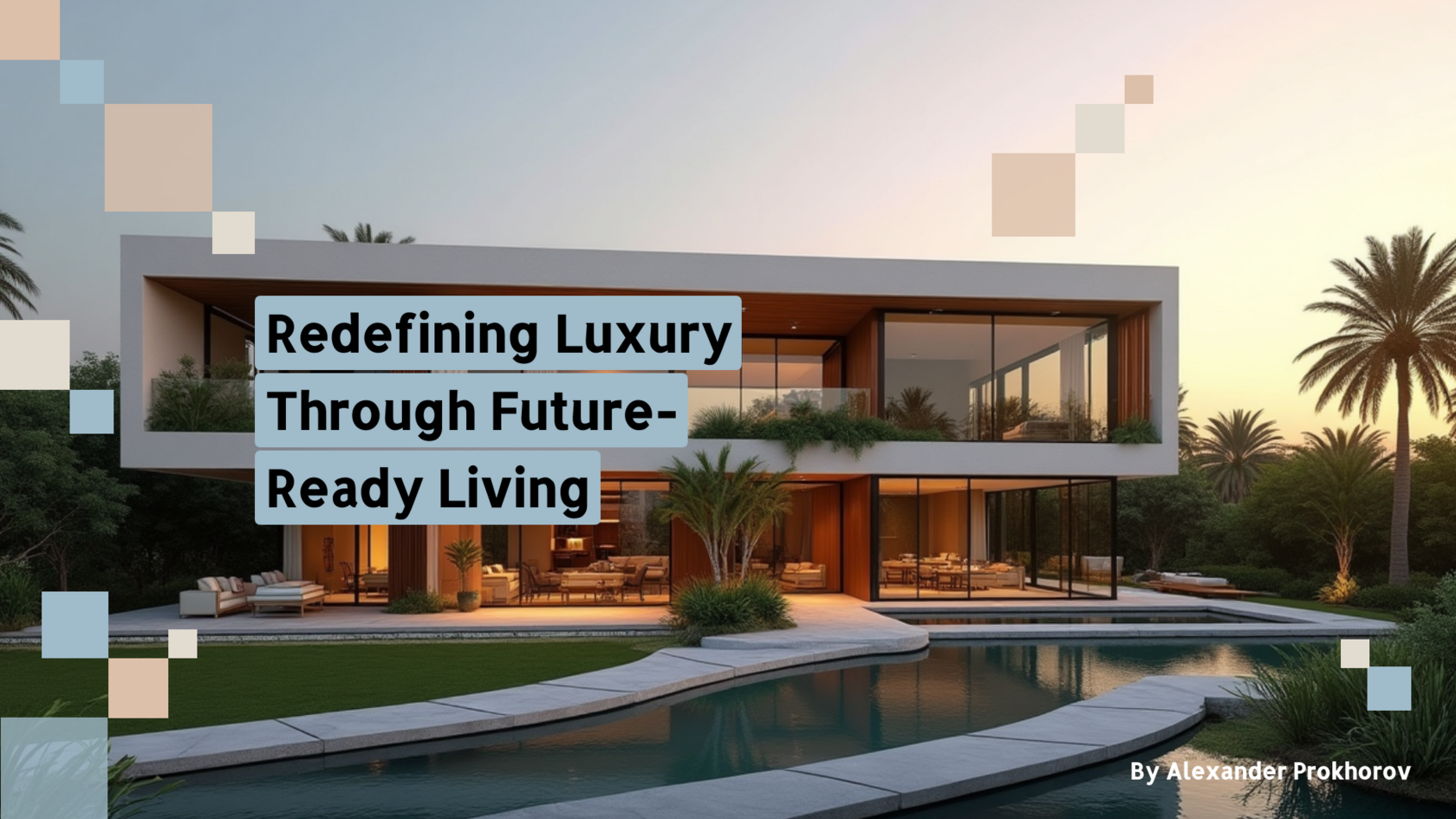
In the carefully curated calm of Jumeirah Golf Estates, a property like this—spanning over 7,100 square feet of refined architecture—is not just a residence. It's a quiet declaration of how far our urban landscapes have come, and a subtle reminder of how much further they need to go.
Five en-suite bedrooms, a dedicated “man cave,” thoughtfully apportioned space—these are no longer just luxuries; they speak to the evolving expectations of personal space, privacy, and leisure in the 21st-century home. When Dylan Ferguson from Equity Real Estate presented this villa, what struck me most wasn't the scale—it was the precision. Every square foot appears accounted for, not simply to impress, but to serve. This is increasingly the hallmark of aspirational housing: a convergence of aesthetic appeal and functional intention.
But here’s where we, as urban developers and planners, must probe deeper. Villas like this reflect a highly tailored lifestyle—private, insulated, rich in experiences. But how do we integrate such models of residential excellence into the broader mission of sustainable urban futures? The Beayute verification ensures transparency and trust in the transaction—a much-needed innovation in real estate—but can we extend that same ethos to how we think about land use, natural resource efficiency, and long-term community integration?
The modern villa is often seen as the pinnacle of luxury living, but what if we reframed it as a prototype? Can its design vocabulary be adapted for denser formats? Should spatial generosity automatically imply exclusivity, or can it evolve to reflect generosity in access, biodiversity, or shared communal assets?
My work in land strategy often brings me back to the fundamentals: location is a legacy, not a snapshot. And while a 26.5 million dirham property might speak to ambition today, the question is whether it will resonate with resilience tomorrow. In regions like the UAE—where rapid urbanization has outpaced many normative planning cycles—each such residence becomes both a mirror and a compass. It shows us what people desire, but also hints at what cities must soon deliver: smart spaces that are not only beautiful but deeply intelligent, resource-sensitive, and socially inclusive.
As developers, planners, and investors, how do we ensure that every villa, every block, and every district contributes not just to immediate comfort, but to a lasting urban legacy?
Perhaps the most interesting rooms in modern homes aren't the ones we live in—but the ones we exclude. Where are the communal greenhouses, the integrated work hubs, the transitional spaces that make private life porous to public good?
A home of this stature makes you wonder—not just what’s inside, but what could be just beyond. 🏡
Five en-suite bedrooms, a dedicated “man cave,” thoughtfully apportioned space—these are no longer just luxuries; they speak to the evolving expectations of personal space, privacy, and leisure in the 21st-century home. When Dylan Ferguson from Equity Real Estate presented this villa, what struck me most wasn't the scale—it was the precision. Every square foot appears accounted for, not simply to impress, but to serve. This is increasingly the hallmark of aspirational housing: a convergence of aesthetic appeal and functional intention.
But here’s where we, as urban developers and planners, must probe deeper. Villas like this reflect a highly tailored lifestyle—private, insulated, rich in experiences. But how do we integrate such models of residential excellence into the broader mission of sustainable urban futures? The Beayute verification ensures transparency and trust in the transaction—a much-needed innovation in real estate—but can we extend that same ethos to how we think about land use, natural resource efficiency, and long-term community integration?
The modern villa is often seen as the pinnacle of luxury living, but what if we reframed it as a prototype? Can its design vocabulary be adapted for denser formats? Should spatial generosity automatically imply exclusivity, or can it evolve to reflect generosity in access, biodiversity, or shared communal assets?
My work in land strategy often brings me back to the fundamentals: location is a legacy, not a snapshot. And while a 26.5 million dirham property might speak to ambition today, the question is whether it will resonate with resilience tomorrow. In regions like the UAE—where rapid urbanization has outpaced many normative planning cycles—each such residence becomes both a mirror and a compass. It shows us what people desire, but also hints at what cities must soon deliver: smart spaces that are not only beautiful but deeply intelligent, resource-sensitive, and socially inclusive.
As developers, planners, and investors, how do we ensure that every villa, every block, and every district contributes not just to immediate comfort, but to a lasting urban legacy?
Perhaps the most interesting rooms in modern homes aren't the ones we live in—but the ones we exclude. Where are the communal greenhouses, the integrated work hubs, the transitional spaces that make private life porous to public good?
A home of this stature makes you wonder—not just what’s inside, but what could be just beyond. 🏡