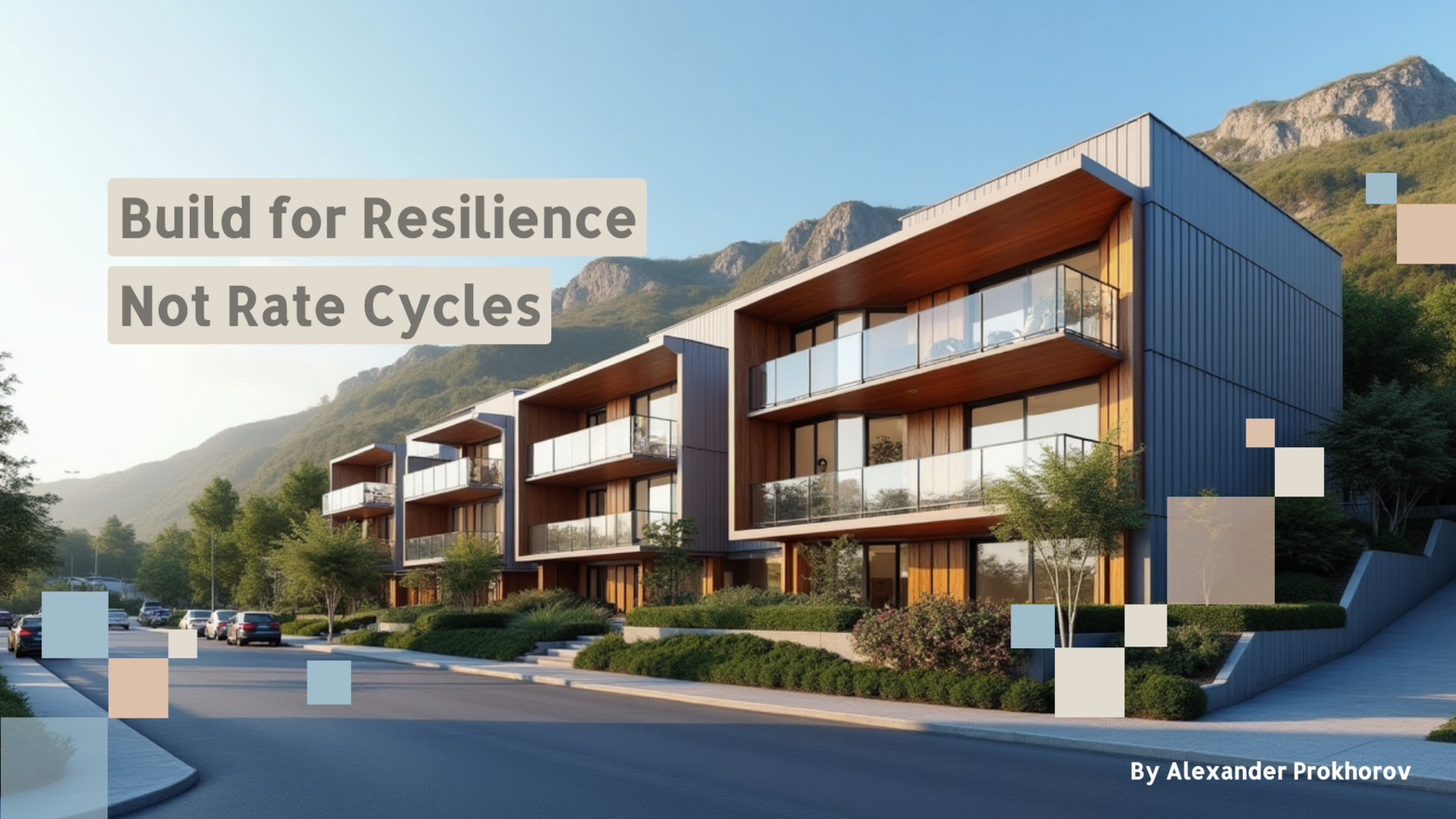
In the arc of urban development, interest rate movements often seem like ephemeral ripples—newsworthy, yes, but rarely transformative. Yet today’s whispers of an imminent Federal Reserve rate cut are more than monetary policy maneuvering. They are signals—small, subtle signals—in a much grander system of balance, risk, and human-centered growth. As someone who’s spent over a decade in the nexus of land strategy and urban evolution, I’ve learned to listen closely when systems shift.
The Fed may trim rates in response to cooling inflation and labor market strain. A 25 basis point cut is likely, perhaps as early as September. But even as we fixate on that statistical 95% probability, we must acknowledge a more profound truth: cheaper capital does not automatically translate to greater accessibility or smarter growth. Mortgage rates, for instance, are influenced by a constellation of variables—economic sentiment, global bond markets, geopolitical risk—that lie well beyond the Fed’s control. We’ve seen this before: the last rate cut didn’t yield softer mortgage rates. Why should this one?
And yet, within this unpredictability lies an opportunity for reflection. In the real estate industry, we too often look to rate changes as levers of short-term momentum. Projects are delayed in anticipation; land acquisitions pivot on speculation; financing strategies get hurried reconfigurations. But forward-looking development—deep, lasting, equitable development—is not built on reactionary decisions. It is built on durable principles.
How, then, should we engage with this rate cut discourse?
For me, it becomes a prompt to challenge prevailing assumptions. If capital may get marginally cheaper, can we also make space cheaper—not just in cost, but in inclusivity, in regenerative purpose, in alignment with human wellbeing? Can we finally decouple affordability from volatility?
Moreover, now is an opportune moment to examine the elasticity of our urban fabric. With AI-enhanced modeling, we can simulate countless development futures under different rate environments. With decentralized finance and emerging technology platforms, new coalition-driven financing models are possible. Why should "resilience" be a passive state of endurance, when we can design economies and structures that evolve with fluidity?
In the end, what the Fed does next is merely a data point. The real change will come from how developers, planners, and communities choose to respond—not to stimuli, but to shared purpose.
Perhaps the more essential question isn’t whether rates fall—but whether our collective thinking can rise to match the complexities of a century unfolding around us 🌍.
The Fed may trim rates in response to cooling inflation and labor market strain. A 25 basis point cut is likely, perhaps as early as September. But even as we fixate on that statistical 95% probability, we must acknowledge a more profound truth: cheaper capital does not automatically translate to greater accessibility or smarter growth. Mortgage rates, for instance, are influenced by a constellation of variables—economic sentiment, global bond markets, geopolitical risk—that lie well beyond the Fed’s control. We’ve seen this before: the last rate cut didn’t yield softer mortgage rates. Why should this one?
And yet, within this unpredictability lies an opportunity for reflection. In the real estate industry, we too often look to rate changes as levers of short-term momentum. Projects are delayed in anticipation; land acquisitions pivot on speculation; financing strategies get hurried reconfigurations. But forward-looking development—deep, lasting, equitable development—is not built on reactionary decisions. It is built on durable principles.
How, then, should we engage with this rate cut discourse?
For me, it becomes a prompt to challenge prevailing assumptions. If capital may get marginally cheaper, can we also make space cheaper—not just in cost, but in inclusivity, in regenerative purpose, in alignment with human wellbeing? Can we finally decouple affordability from volatility?
Moreover, now is an opportune moment to examine the elasticity of our urban fabric. With AI-enhanced modeling, we can simulate countless development futures under different rate environments. With decentralized finance and emerging technology platforms, new coalition-driven financing models are possible. Why should "resilience" be a passive state of endurance, when we can design economies and structures that evolve with fluidity?
In the end, what the Fed does next is merely a data point. The real change will come from how developers, planners, and communities choose to respond—not to stimuli, but to shared purpose.
Perhaps the more essential question isn’t whether rates fall—but whether our collective thinking can rise to match the complexities of a century unfolding around us 🌍.