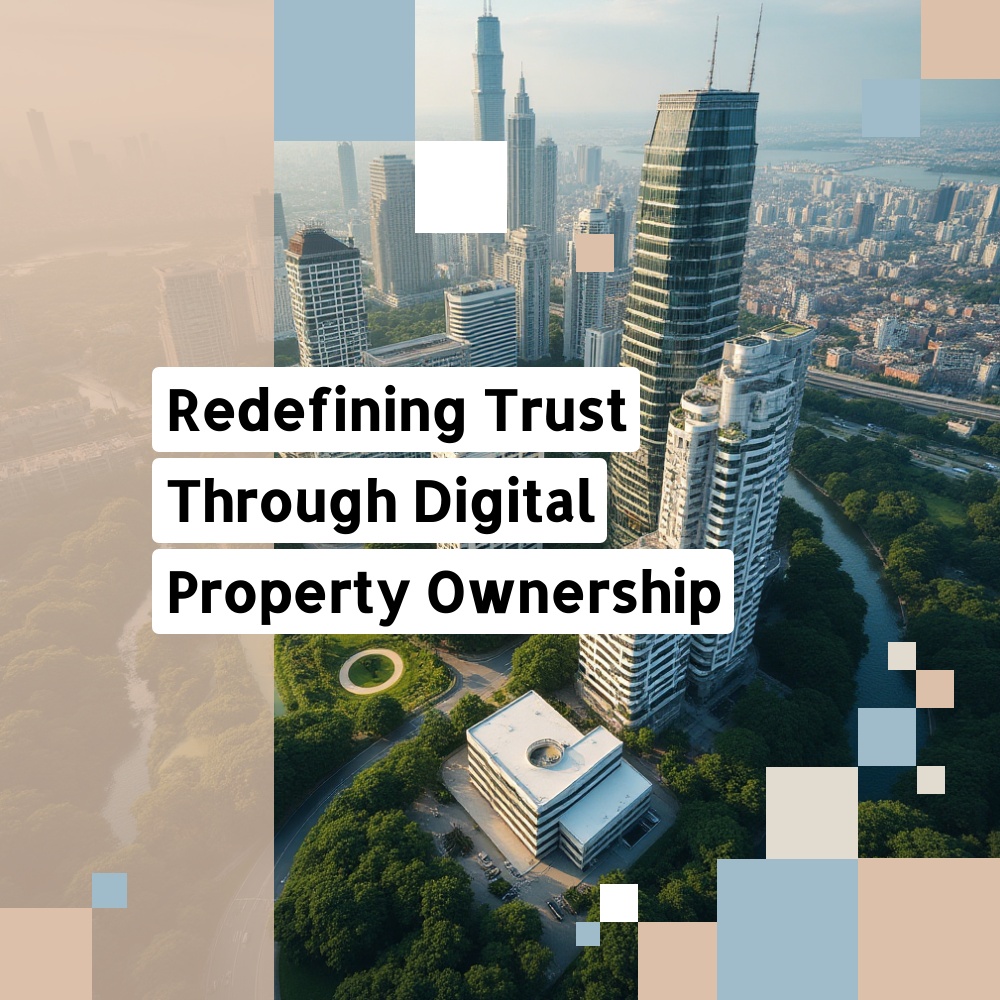
In the evolving fabric of urban systems, the true markers of progress are often not skyscrapers or grand public squares—but rather the seamless, often invisible processes that enable them. Abu Dhabi’s implementation of the Property Ownership Data Change Service may seem procedural, yet it quietly exemplifies something much deeper: an institutional embrace of clarity, accessibility, and system efficiency.
As someone who has spent over a decade navigating the intricate interfaces between land, regulation, and human need, I see this as more than just a streamlined service. It's a meaningful step toward the kind of frictionless land governance that cities of the future will require. The real estate sector doesn’t evolve purely through construction—it evolves through the ability of systems to accommodate change, transparently and responsively.
Many emerging urban centers still struggle with opaque bureaucracies and fragmented property records. This creates friction at multiple layers—from investor hesitation, to legal disputes, to stalled community development. What Abu Dhabi is signaling here, particularly through its automation and PIN-based validation, is the critical importance of secure but accessible transitions in property data. This isn’t just a nod to digital convenience; it’s a recognition that trust is as much about process as it is about ownership.
But let’s not lose the contextual depth. Property, whether residential or industrial, remains fundamentally tied to society’s trust in long-term vision. A three-day, cost-free process to reassign and update ownership is, in effect, a vote for transparency—an invitation for mobility, for entrepreneurship, and most importantly, for grounded confidence in the land beneath one’s feet.
Looking forward, I envision an intertwined evolution of land systems and civic technology—in which AI, smart contracts, and blockchain can begin to augment this same process on a wider scale. Imagine systems where dynamic land use patterns inform service distribution in real time, or where property data transitions automatically harmonize across energy grids, transit networks, and environmental compliance platforms.
Of course, digitization must never lose its human context. In every transaction lies a story—a shift in livelihood, a family’s relocation, or a business’s next leap. Behind each submitted map or clearance letter sits someone trusting the system to carry them forward without friction or inequity. That moral layer is one our digital tools must always honor.
Perhaps the ultimate question isn’t how fast we can transfer data—but how deeply these systems are aligned with the long-term resilience and dignity of the societies they serve. If bureaucracy no longer hinders, then what new forms of collective imagination might begin to rise? 🏙️
As someone who has spent over a decade navigating the intricate interfaces between land, regulation, and human need, I see this as more than just a streamlined service. It's a meaningful step toward the kind of frictionless land governance that cities of the future will require. The real estate sector doesn’t evolve purely through construction—it evolves through the ability of systems to accommodate change, transparently and responsively.
Many emerging urban centers still struggle with opaque bureaucracies and fragmented property records. This creates friction at multiple layers—from investor hesitation, to legal disputes, to stalled community development. What Abu Dhabi is signaling here, particularly through its automation and PIN-based validation, is the critical importance of secure but accessible transitions in property data. This isn’t just a nod to digital convenience; it’s a recognition that trust is as much about process as it is about ownership.
But let’s not lose the contextual depth. Property, whether residential or industrial, remains fundamentally tied to society’s trust in long-term vision. A three-day, cost-free process to reassign and update ownership is, in effect, a vote for transparency—an invitation for mobility, for entrepreneurship, and most importantly, for grounded confidence in the land beneath one’s feet.
Looking forward, I envision an intertwined evolution of land systems and civic technology—in which AI, smart contracts, and blockchain can begin to augment this same process on a wider scale. Imagine systems where dynamic land use patterns inform service distribution in real time, or where property data transitions automatically harmonize across energy grids, transit networks, and environmental compliance platforms.
Of course, digitization must never lose its human context. In every transaction lies a story—a shift in livelihood, a family’s relocation, or a business’s next leap. Behind each submitted map or clearance letter sits someone trusting the system to carry them forward without friction or inequity. That moral layer is one our digital tools must always honor.
Perhaps the ultimate question isn’t how fast we can transfer data—but how deeply these systems are aligned with the long-term resilience and dignity of the societies they serve. If bureaucracy no longer hinders, then what new forms of collective imagination might begin to rise? 🏙️