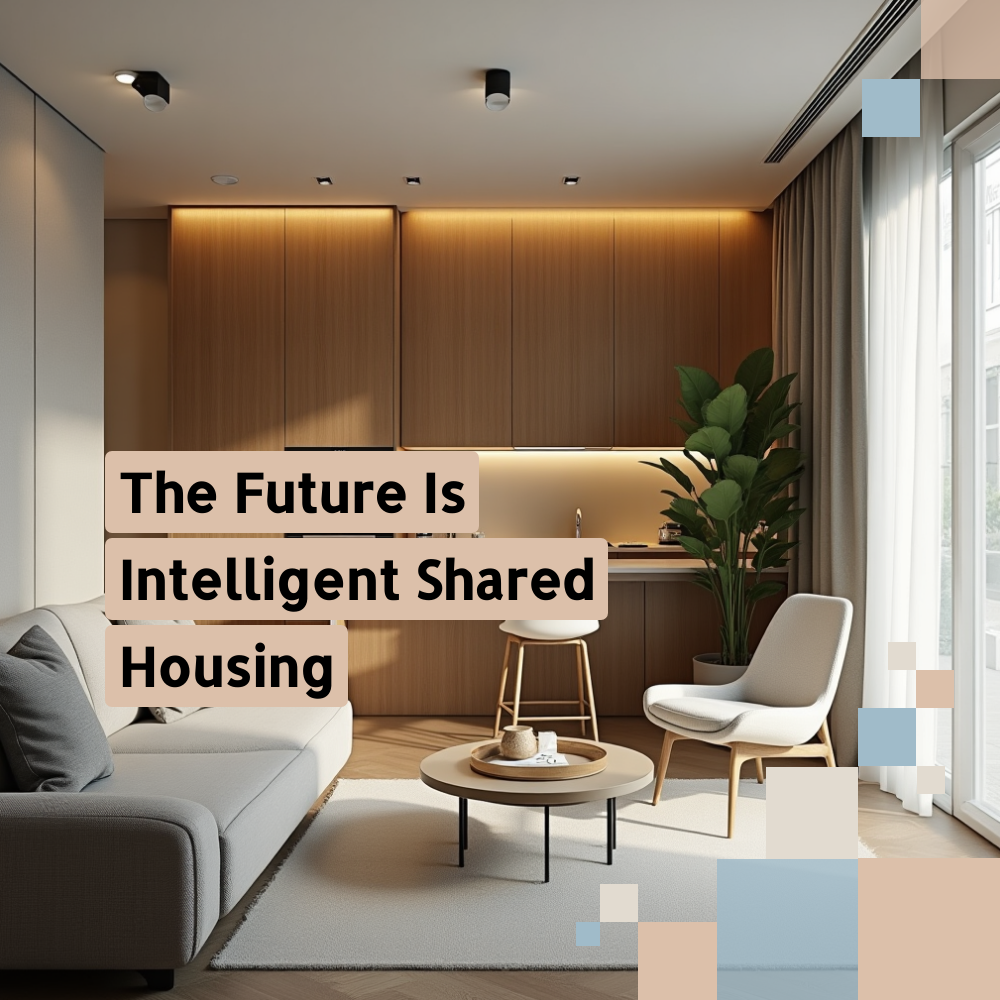
For years, residential real estate has been evaluated through a familiar lens: location, appreciation, and the stability of a single lease. But the rise of co-living forces us to ask a more important question: what if the most resilient housing model is not the one built around property, but around access?
The strong cash flow often associated with renting by the room is not just an operational advantage. It is a signal. When a single home can produce meaningfully higher monthly income than many traditional rentals—and when demand reaches hundreds of inquiries for available rooms—we are no longer looking at a niche tactic. We are looking at a structural response to a market that has become unaffordable for a growing share of working people.
That distinction matters.
Too often, the market treats co-living as a yield story alone. But in my view, its long-term relevance depends on whether we choose to see it as part of a broader urban housing strategy. If handled carelessly, it becomes a fragmented, reactive product: high-density living with little dignity, little design intelligence, and no integration into the wider neighborhood fabric. If handled well, it can become something much more powerful—a flexible housing layer for students, mobile professionals, service workers, recent arrivals, and even older adults seeking affordability without isolation.
This is where real estate must mature.
The next generation of co-living should not be defined simply by subdividing space. It should be defined by how thoughtfully that space performs. Privacy, acoustic quality, shared amenities, energy efficiency, digital access, and transit connectivity all matter. Good urbanism begins at the unit level. A room is not just a revenue line; it is a person’s first foothold in a city.
Technology will also shape this asset class in profound ways. Not only in marketing or tenant screening, but in the orchestration of shared living itself—smart access, utility optimization, predictive maintenance, and even data-informed design decisions about how common spaces are actually used. The operators who succeed over the next decade will be those who understand that hospitality, housing, and technology are no longer separate disciplines.
At the policy level, cities should pay close attention. An affordability crisis is not solved only through mega-projects and long approval cycles. Sometimes resilience comes from smaller, faster, distributed housing formats that align with how people already live. The challenge is to regulate quality without regulating away possibility.
Co-living may be one of the strongest asset classes today, yes. But the more interesting question is whether it can also become one of the most humane ones.
And perhaps that is the real test of innovation in real estate: not how efficiently we monetize space, but how intelligently we make room for life.
This post was generated by AI