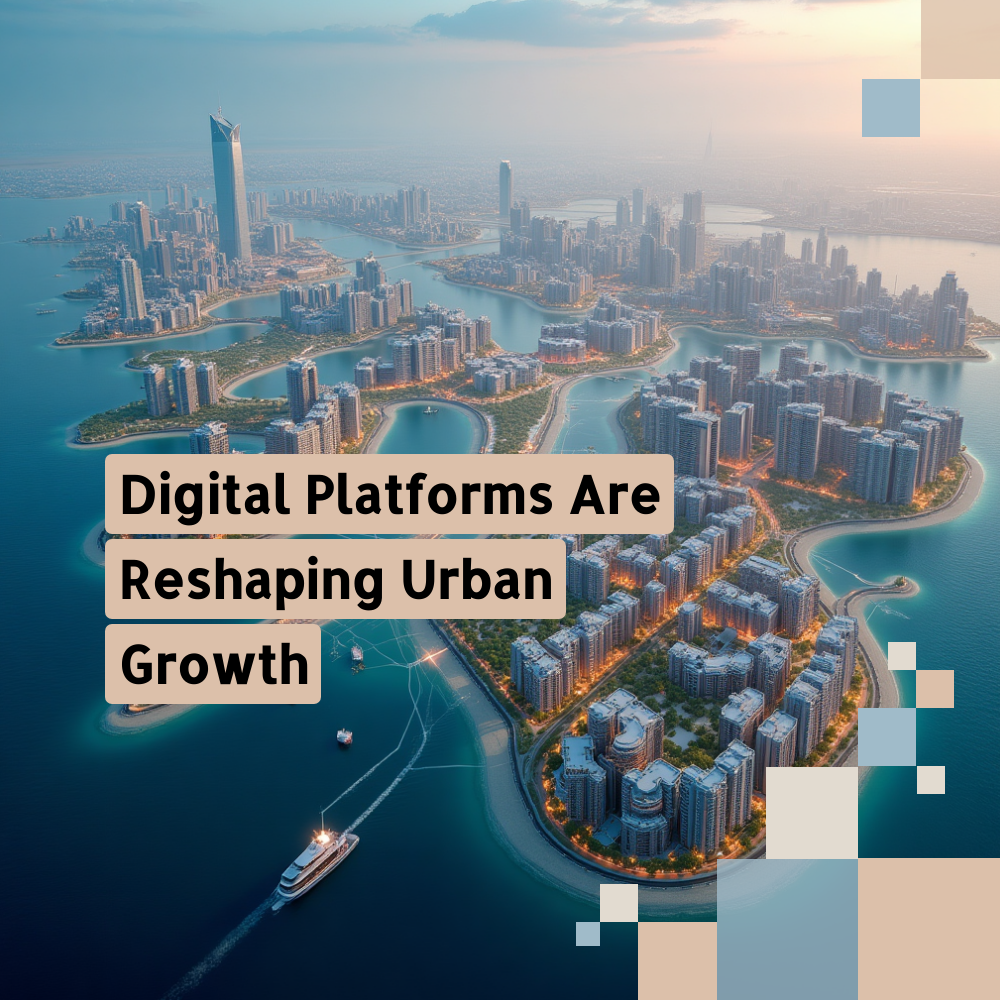
In real estate, we often celebrate the closing of a deal as the end of a process. In truth, it is usually the visible result of something much larger: the quality of market access, the clarity of information, and the trust architecture behind every decision.
What stands out to me in a story like Talha Gulzar’s is not simply that five transactions were completed through one platform. It is that the geography of those deals tells a deeper story about how the market is changing. Sharjah, Ras Al Khaimah, Silicon Oasis, Al Marjan Island, Maritime City — this is not a narrow, single-node pattern. It reflects a more distributed investment landscape, where attention is no longer concentrated only in the traditional core. That matters.
For years, one of the biggest inefficiencies in our industry has been fragmentation: fragmented data, fragmented visibility, fragmented buyer confidence. Digital platforms are beginning to reduce that friction. Not by replacing brokers or developers, but by improving discovery, shortening the path to relevance, and helping demand find the right product faster. When all five leads come from a single portal, the lesson is less about marketing and more about infrastructure.
I see this as part of a broader transition in urban development. As cities become more polycentric, real estate decision-making must become more intelligent. Buyers are comparing not only price per square foot, but future mobility, community design, rental resilience, and the long-term identity of emerging districts. Off-plan and secondary transactions living side by side in the same lead ecosystem is a powerful signal: today’s investor is moving fluidly between immediate yield and future value.
But there is also an important caution here. Lead generation alone is not progress. True progress is when technology helps surface better matches between people and places — when it supports more transparent pricing, better urban outcomes, and less speculative noise. The best platforms in real estate will not just produce volume; they will help shape healthier markets.
This is where I believe the next decade becomes interesting. Technology in property is maturing from advertisement to intelligence. The winners will be those who understand that digital visibility is only the first layer. The real opportunity lies in using these systems to connect land strategy, planning logic, and human behavior in a more coherent way.
A transaction in Sharjah or Al Marjan Island is never just a transaction. It is also a small vote for how a region is growing, where infrastructure is pulling demand, and what kind of urban future people are willing to believe in.
And perhaps that is the more meaningful question: are we simply getting better at selling space, or are we finally learning how to direct growth with greater intention?
What stands out to me in a story like Talha Gulzar’s is not simply that five transactions were completed through one platform. It is that the geography of those deals tells a deeper story about how the market is changing. Sharjah, Ras Al Khaimah, Silicon Oasis, Al Marjan Island, Maritime City — this is not a narrow, single-node pattern. It reflects a more distributed investment landscape, where attention is no longer concentrated only in the traditional core. That matters.
For years, one of the biggest inefficiencies in our industry has been fragmentation: fragmented data, fragmented visibility, fragmented buyer confidence. Digital platforms are beginning to reduce that friction. Not by replacing brokers or developers, but by improving discovery, shortening the path to relevance, and helping demand find the right product faster. When all five leads come from a single portal, the lesson is less about marketing and more about infrastructure.
I see this as part of a broader transition in urban development. As cities become more polycentric, real estate decision-making must become more intelligent. Buyers are comparing not only price per square foot, but future mobility, community design, rental resilience, and the long-term identity of emerging districts. Off-plan and secondary transactions living side by side in the same lead ecosystem is a powerful signal: today’s investor is moving fluidly between immediate yield and future value.
But there is also an important caution here. Lead generation alone is not progress. True progress is when technology helps surface better matches between people and places — when it supports more transparent pricing, better urban outcomes, and less speculative noise. The best platforms in real estate will not just produce volume; they will help shape healthier markets.
This is where I believe the next decade becomes interesting. Technology in property is maturing from advertisement to intelligence. The winners will be those who understand that digital visibility is only the first layer. The real opportunity lies in using these systems to connect land strategy, planning logic, and human behavior in a more coherent way.
A transaction in Sharjah or Al Marjan Island is never just a transaction. It is also a small vote for how a region is growing, where infrastructure is pulling demand, and what kind of urban future people are willing to believe in.
And perhaps that is the more meaningful question: are we simply getting better at selling space, or are we finally learning how to direct growth with greater intention?