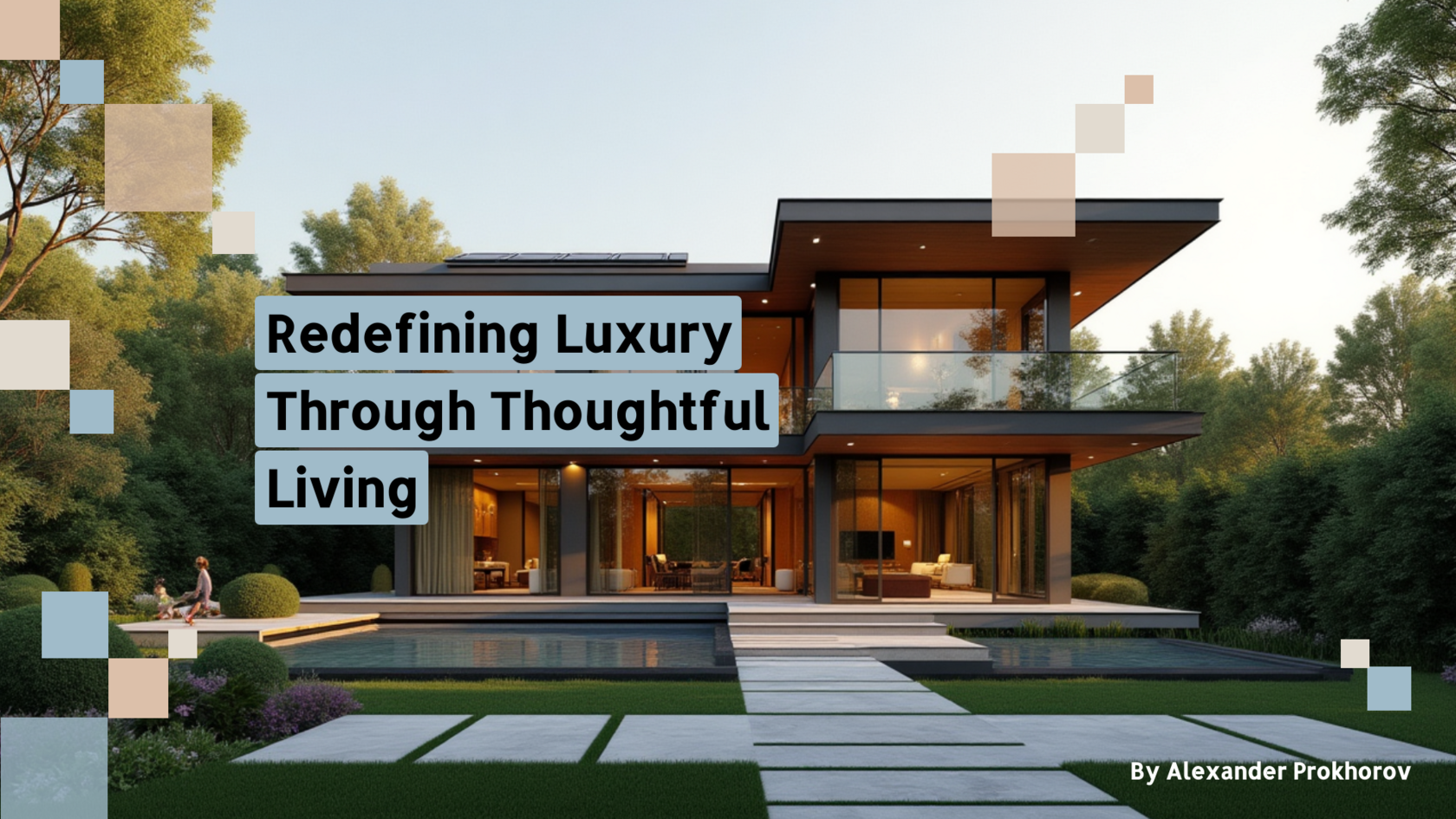
In our ever-evolving urban narrative, the unveiling of a villa like this one in Harmony 2 — a 5-bedroom residence with over 6,000 square feet of considered interior space and immediate adjacency to the park — is less about singular opulence, and more about the subtle signals it sends about where premium living is headed.
It’s tempting to focus on square footage and price tags; 6,300 ft² built-up, 6,700 ft² of land, positioned at 16 million dirhams — these are valuable data points. But what captures my attention is how a home like this begins to reflect the early outlines of a shift in our aspirational models. More than marble finishes and sprawling layouts, the real promise lies in its quiet adjacency to nature, in its placement within an evolving ecosystem of lifestyle, community, and spatial responsibility.
Harmony 2, as a district, seems to be reaching toward an urban ideal that values contextual beauty over isolated excess. A villa located “directly on the park” speaks to something deeper — the rediscovery of green as amenity, not afterthought. In markets where acceleration has often outpaced reflection, properties like this provide an early sketch of a more balanced and globally relevant urban typology.
What’s increasingly clear is that the notion of luxury is undergoing the earliest phases of a renaissance. It is being decoupled from mere commodity metrics and reimagined through a lens of sustainability, access, and design integrity. Large homes will remain in demand — particularly in knowledge cities such as Dubai — but the smartest among them will participate in a deeper choreography. It will be less about dominance of space, more about calibration of experience.
From a land strategy perspective, these homes are the result of decisions made years prior: zoning envelopes drawn thoughtfully, circulation frameworks that accommodate both privacy and permeability, regulations that tiptoe the line between density and dignity. Their very existence reminds us that good development is not reactive — it’s pre-emptive.
Technology, increasingly, will close the feedback loop between how these spaces are planned, experienced, and adapted over time. Whether through digital twins or data-informed masterplans, we are moving toward an era where homes such as this will be evaluated not only by their current aesthetic or market positioning but by their capacity to adapt across decades.
There’s a term I often return to in my work: spatial foresight. Not just planning for today’s lifestyle, but anticipating how the home — and its surrounding fabric — echoes human needs yet undefined.
Perhaps the truest question isn’t what this villa says about the market — but what it whispers about our emerging values.
It’s tempting to focus on square footage and price tags; 6,300 ft² built-up, 6,700 ft² of land, positioned at 16 million dirhams — these are valuable data points. But what captures my attention is how a home like this begins to reflect the early outlines of a shift in our aspirational models. More than marble finishes and sprawling layouts, the real promise lies in its quiet adjacency to nature, in its placement within an evolving ecosystem of lifestyle, community, and spatial responsibility.
Harmony 2, as a district, seems to be reaching toward an urban ideal that values contextual beauty over isolated excess. A villa located “directly on the park” speaks to something deeper — the rediscovery of green as amenity, not afterthought. In markets where acceleration has often outpaced reflection, properties like this provide an early sketch of a more balanced and globally relevant urban typology.
What’s increasingly clear is that the notion of luxury is undergoing the earliest phases of a renaissance. It is being decoupled from mere commodity metrics and reimagined through a lens of sustainability, access, and design integrity. Large homes will remain in demand — particularly in knowledge cities such as Dubai — but the smartest among them will participate in a deeper choreography. It will be less about dominance of space, more about calibration of experience.
From a land strategy perspective, these homes are the result of decisions made years prior: zoning envelopes drawn thoughtfully, circulation frameworks that accommodate both privacy and permeability, regulations that tiptoe the line between density and dignity. Their very existence reminds us that good development is not reactive — it’s pre-emptive.
Technology, increasingly, will close the feedback loop between how these spaces are planned, experienced, and adapted over time. Whether through digital twins or data-informed masterplans, we are moving toward an era where homes such as this will be evaluated not only by their current aesthetic or market positioning but by their capacity to adapt across decades.
There’s a term I often return to in my work: spatial foresight. Not just planning for today’s lifestyle, but anticipating how the home — and its surrounding fabric — echoes human needs yet undefined.
Perhaps the truest question isn’t what this villa says about the market — but what it whispers about our emerging values.